Girls and Women

You might remember we travelled to Pemba in May, we actually have another trip coming up next week. We were invited to a colleagues’ house for lunch one day. He is younger than me and he has six children. Whether he has one or two wives (which I think is more common nowadays on Pemba than on Unguja) I do not know. I didn’t really want to ask. The first female I saw was a young woman holding a baby. It was hard to tell whether she was a wife or a child of our colleague’s but it turned out she was his oldest daughter. While we were chatting he took over watching the little one, who was able to stand with some help from her Dad. He even managed to walk her over to me (a distance of about 3 metres). But something seemed off kilter. When I picked her up I realised what it was: She’s not a toddler, she’s a baby, light as a feather! I asked her father how old she was and he said 6 months. Wow, nearly walking at 6 months!? He said it was normal for kids here.

Recently I was editing materials for the College, to go onto our Online Learning Management System, on child growth and development. The figures I read there about the normal age for toddlers to start walking (I think the range was from 9 to 18 months) prompted me to check with a nurse teacher about the above statement from our Pemban colleague regarding his child and the general age for babies to start walking in this neck of the woods. The first thing she asked was: Was the baby a girl or a boy? She wasn’t at all surprised about my answer. She explained that mainly the girls get dragged around by older siblings (often not much more than toddlers themselves) and don’t get that much attention from the parents. Girls’ reaction to being pushed, pulled, dropped and whatever is often to do everything to learn to stand and walk by themselves, being  forced to develop as much independence as early as possible, – even though they are not ready for it from a developmental perspective.    Wow.

Here’s another common story about the fate of females in this culture, but from a different stage of life: A month or two ago a colleague’s husband died. We were told that she was not going to come to work for 4 months according to the local custom. We both thought, okay, so this is a period of mourning for her. I then found out that during this period she will not be allowed to leave the house. I asked the colleague who’d been explaining this to me, whether she thought this was a healthy way of mourning (naïve as I was) and she explained: “Oh, it’s not about mourning. She is not only not allowed to leave the house, she is also forbidden to speak to any man during this period of time.” The reason being that for up to four months a pregnancy from her deceased husband could remain invisible and a new suitor could come up, marry her and claim the child to be his. (By the way, the woman we are talking about is in her mid fifties). I asked my two colleagues who are around my age  and have both been exposed to “Western” culture through their education whether this was an old tradition that was dying out. They replied that, no, if their husband died they would do exactly the same thing.

But then they said that if you were already well into your pregnancy when the husband died you only had to stay in the house and not talk to men until you have given birth, so if you are on your 7th month it’s just for two to three months you have to do this. 

Well, that’s a real relief.

Posted in Uncategorized | 4 Comments

How the finest sugarcane juice this side of the equator, and probably the other side too, is created.

First find a local sugarcane juice stall, spend 10 minutes in obligatory banter with your sugarcane juice man, then ask for your juice of choice. A half pint glass usually does the job. Sugarcane juice comes straight from the cane. No preservatives. No additives. You ring it out like water from a wet towel.  It’s hard work squeezing juice from cane wood all day so your sugarcane juice man will first wipe the sweat from his brow onto the seat of his pants. This must be a regular action as the seat of his pants are a rich, thick oily black in comparison to the rest of his pants, which are just filthy rotten. Sugarcane man then picks up a cane of sugar, trims it with a rusty machete and pulls it through a couple of handmade rollers to squeeze out the juice into a plastic bucket. It’s astounding how much juice comes out of the thing. He repeats this a couple of times. Next, and this distinguishes a quality sugarcane juice man from your shoddy variety, usually found in the tourist areas, he takes a couple halves of lime and a few pieces of fresh ginger, blows them clean, shows you a nice toothy, spit flecked grin and then folds them into the sugarcane before putting it through the rollers again. The sugar cane is then discarded onto a black foaming pile of other sugarcane discards at the back of the hut (which on closer inspection is black and foaming thanks to the clouds of flies swarming and crawling all over it). Sugarcane man wipes his hand on his arse again and then selects a half pint glass. This he dips into a dirty bucket of water and then into a second less dirty bucket of water. He then takes a black oily rag and diligently smears the glass to what I assume counts as a state of gleaming cleanliness around here.

Sugarcane man then asks if you want cold or warm juice. Naturally, I want cold on a hot sticky day. So, Sugarcane man wipes both hands on his arse before carefully selecting and delicately picking out with dirt caked fingernails a few cubes of ice from another bucket of water filled with straw (to slow down the melting) and chucks them into the glasses before filling them with the juice he’s just squeezed.

If you hold a glass of the finest Zanzibar sugarcane juice up to sunlight it resembles an opaque light snot green with a thin, sickly head of light snot green foam and other slightly darker snot green things floating in it, which is why it took us three months to build up the courage to try the stuff. And tasting it . . .  is amazing. It’s honey sweet and has a fantastic spicy tanginess from the lime and ginger. However, it’s best drunk facing away from the sugarcane man’s hut to stop reminding you how it’s made.

Makes hair grow in places you don’t want hair to grow.


Posted in Uncategorized | 6 Comments

You have awoken!? – Indeed, I have awoken peacefully….

Hi everyone, it’s been a while, I know but I trust John has been keeping you entertained.

Thinking back I’ve just remembered I had my first Kiswahili lesson on our honeymoon. John and I were walking along a deserted, rather breezy beach on the Baltic coast in Northern Germany last December. Making use of one of the few sunny spells during our 3-day stay up there we wrapped ourselves uo and strolled along the coast and John taught me the words he already knew. John being John he’d managed to get himself a book and started learning as soon as our placement in Zanzibar was confirmed – that was in mid November, a frantic time, two weeks before our wedding and ten weeks before abandoning our home and departing for Tanzania!

It is amazing how as soon as you start learning Kiswahili you either just learn phrases and their rough meanings without understanding what you are actually saying, or you dive straight into the intricacies of the language, both grammatically and culturally speaking: “Hujambo” is generally translated as “How are you?”, but actually it means: “You do not have a problem? “ The answer is “Sijambo” – “I do not have a problem”.  (The dumbed down tourist version is “jambo” only, for question and reply). Already an interesting concept that the absence of problems equates to being well. “Poa” – “cool” (as in a low temperature), is also used regularly as an answer and describes a state of well-being, since a low temperature is something very rare and welcome here. If you have been ill and people are inquiring about you, you say “nimeshapoa” – “I have already cooled down” no matter what the illness might have been doing to you. “Mzima?” – Mzima!” is another good one: An elliptic way of saying “Do you feel complete, whole?” – “Yes, I feel complete”.

There are by the way 159 ways of greeting your colleagues  and neighbours and you must use at least 13 of them to have made a polite conversation during your first encounter of the day. My favourite one for the morning: “Umeamka!!?”–  “You have a awoken!?” Still not entirely sure what the standard reply is, but I think it is “Ndiyo, nimeamka salama” –  “Indeed, I have awoken peacefully.” Nice, eh?

Kiswahili (“the language of the coast”) is spoken as a lingua franca in many East African countries, but it actually originates from Zanzibar, where there are no regional languages and Kiswahili is therefore spoken in the home. We are told that because of this the Kiswahili we are learning here is “ the purest”, that means the complex grammar is adhered to more meticulously, the language is more embellished and a greater variety of vocabulary is used than in other countries. Thanks very much…

Kiswahili is an agglutinative language,  that means an entire sentence like “she has not received it yet” can be contained in a single word – “Hajaipokea”. Obviously that means that nearly every little sound you hear bears an important meaning and you have to listen really carefully, especially as people tend to speak horribly quickly. Also tricky: The verb stem is at the end, not the beginning. So here we are, slowly constructing syllable by syllable laden with meaning, trying not to put our counterparts to sleep while we’re cobbling our words together. Ahhh!

7 different noun classes which entail learning different forms for personal pronouns, possessive pronouns, demonstrative pronouns, adjectives, the preposition “of” etc. also keep us on our toes.

Another interesting novelty for us: You have a different verb for “kuwa” –  “to be”, when places are involved. So you don’t use the same verb for “He is a teacher” – “Yeye ni mwalimu” as for “He is in town” –  “Yuko mjini”. Also, you differentiate whether someone is somewhere in an area, thereabouts, “yuko”, in a specified place “yupo”, or inside somewhere  or something “yumo”.

But then for example there is no differentiation between the word “still” and “not yet” – both are “bado”. Still haven’t made my mind up on whether I agree with the logic behind that one …

Despite the difficulties around learning to communicate we are beginning to get into it, slowly but surely. We’ve also taken up lessons again since we got so frustrated over still not being able to understand what people are saying beyond small talk, and missing out on interesting conversations even though we’d been conscientiously pouring over our books.
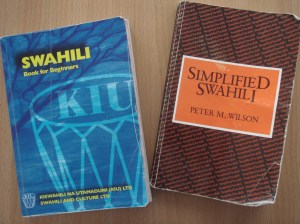
Our constant companions

But of course there is English, which helps us do our work but does not help with learning Kiswahili much – officially the second language, the language of instruction in schools, at university and at court. But that certainly does not mean that everyone actually speaks the language. Even in our work at tertiary and Ministry level, where English is used on a daily basis for official communication we are surprised by people’s English language skills. There is no comparison to the English Kenyans for example speak. While Zanzibaris at a certain professional level are quite relaxed about using the language, their level of accuracy would actually make the vast majority elementary learners – which is why probably not only College students are interested in the online courses we are now offering on the Health Learning Management System we’ve set up.

Even the English – Kiswahili dictionary we were given by VSO is a bit of a surprise: I sit and read and wonder about the English idioms they come up with. And unfortunately, even though we have Edition 3, there are many big fat howlers in there: The entry for “land” is followed by the entry for “lady” (?), and we learn that there are “lady-locked countries”.  And have you come across the word “posomethingumous”?  Hm. Perhaps “sth” sometimes means something else…

NOT a constant companion

Many English words have made it into Kiswahili though, which due to its colonial history and its traditional status of a language of trade in the region is a mix of Bantu languages, Arabic, Portuguese, some German, some Hindi, and English. (We’ve also found some traces of Bahasa Indonesia). Take an English word, write it as you pronounce it as a Kiswahili speaker and where possible add an “i” at the end, always put the emphasis on the penultimate syllable, and you have your kiswahili word. So “shirt” becomes “shati”, to order is “ku-oda”. But there are also other good ones:  Best guess for what a roundabout is in Kiswahili? Is it: “Sacula”,  “Nevastopi” or “Keepilefti”? I swear, it really is one of these three.

There is of course much more to say about Kiswahili, but let’s leave that for another time. This afternoon, if we can get our act together, we’ll be off to the beach for a bit of sun and some reading in our Kiswahili text books – it’s just that bit more comfortable than a beach in the Baltic in mid winter…

************************

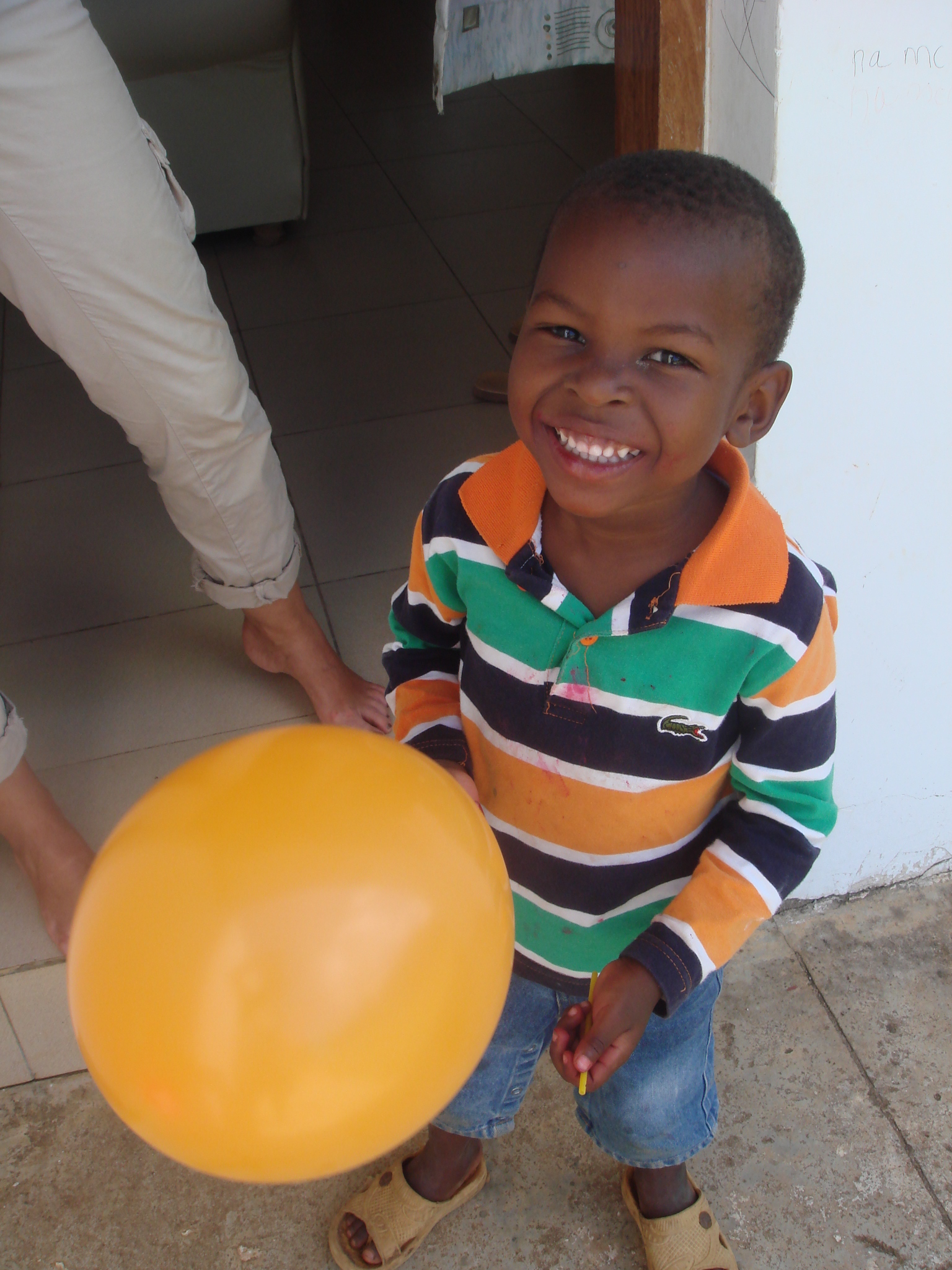
And finally, to add to some boring pictures of books, a photo of cheeky and delightful Hosseini, our favourite 4-year old neighbour after having pestered us for a balloon that goes with the colour of his shirt.
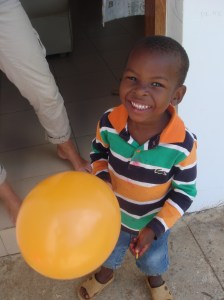
Clearly the best Kiswahili speaker amongst the three of us


Posted in Uncategorized | 7 Comments

Protected: We return…

This content is password-protected. To view it, please enter the password below.

Posted in Uncategorized | Enter your password to view comments.

Unsolved mysteries

Rockwell, the true origins of the Pyramids, the Yeti, UFOs, The Shroud of Turin, Plato’s lost continent of Atlantis, the prophecies of Nostradamus. They are many and numerous. BUT NOW . . . , a disquieting addition to the list. Consett, County Durham (yes, I hear you gasp, ‘John’s home town!’). This small unassuming town, thrust into the dark vortex of unexplained planetary mysteries. Ladies and gentlemen, I give you – “The Pigeon Bermuda Triangle!” – Read the electrifying details below. We are not alone dear reader . . .

http://www.guardian.co.uk/environment/shortcuts/2012/aug/27/riddle-yorkshires-pigeon-bermuda-triangle

Posted in Uncategorized | 6 Comments

Here’s a thing I’ve learnt – ORS

You probably know that Diarrhoea is a major killer, taking countless lives every year through dehydration and fluid loss. WHO estimate 2.6 million people die every year. Poor sanitation is the primary cause and although WHO are making inroads into sanitation improvement across the globe, it’s an uphill struggle. With the noble goal of 100% clean water probably never realisable across the entire planet, you might think all those deaths are tragically unavoidable. Not so, as the cure for diarrhoea couldn’t be simpler namely, oral rehydration salts (ORS), which are simply a mixture of salt, clean water and sugar. So why the deaths with such a simple cure? No access to clean water, salt or sugar? Nope, even in remote areas with poor sanitation most people can access clean water (either bottled or boiled), salt and sugar even if it’s only in emergency quantities to rehydrate an ill person.

Most of the deaths are due to people not being able to keep ORS solutions down. They simply vomit them back up often leaving them in a more weakened state. The trick is to apply ORS is in quantities the body can’t reject. In the west that means a hospital drip. So what do you do in a country without drips or where hospital access is too difficult? Well, apparently you give a teaspoon and a few litre bottles of sugar, salt and water to someone, sit them down by the ill person and every 5 minutes they give 1 teaspoon of it to them for a period of at least 24 hours or until they shows signs of recovery. Believe it or not, you can even use flat coke or some other flat, fizzy drink mixed with salt to the same effect. And trust me, even in the planet’s most god forsaken holes, of which I’ve been to a few, you will find someone selling family size bottles of coke. They use this method in Bangladesh with a 100% success rate yet it’s apparently not known in a lot of other countries. Crazy,eh? 2.6 million deaths every year, most if not all of which could be prevented without a visit to a hospital, just by communicating the right information to people.

And it doesn’t stop there. Cholera affects 3-5 million people every year. I thought Cholera was some untreatable, terminal disease. In fact it’s diarrhoea, though a much more aggressive form of it. The cure? Just the same. A teaspoon, some simple ORS and a bit of patience.

There are some incredible examples of donor aid in action (and some excruciatingly cack handed, numbnut examples, but that’s another story).  Polio practically eradicated from the globe, clean water programs in the most inaccessible of places. The empowerment of millions of some of the poorest women to start up small businesses. How difficult can it be to educate people with a simple 1, 2, 3 set of instructions on dealing with diarrhoea? Answers on a postcard to WHO please.

And now a photo to cheer you up

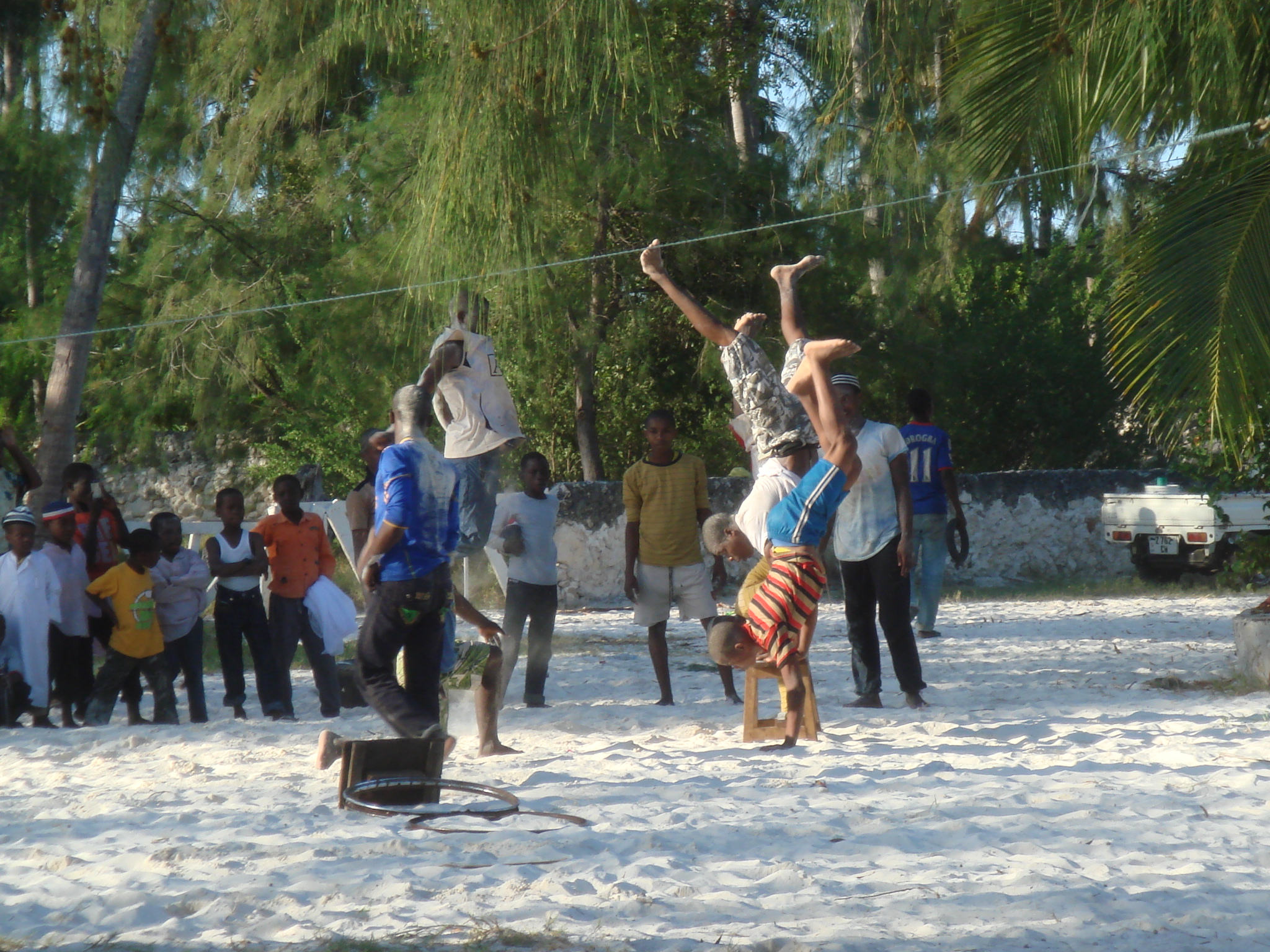
These were a group of school kids on an outing to the beach who just couldn’t get enough of Nadine’s hair. There were two or three dozen of them buzzing around her as we walked along the beach. I, on the other hand, was given short shrift. I put on my best smile, gave the head a polish and presented it at an inviting angle. Not a pat. I even did the old tongue in the ear trick to drum up some interest. Nothing, not a smile. Not even a, ‘nice trick mate but we’ve seen it before’.  All I managed was to get a couple of them to cry (I need to remember to brush my tongue more often). Though I think my real mistake was in trying to compete with the blokes below who were there putting on a tumble and gymnastics show.

I did not see a single one of them do the tongue in the ear trick. Not one.

Posted in Uncategorized | 6 Comments

Pets’ corner

Results of the ‘Write a caption’ competition. Entrants were . . . 2 (Two! Not two thousand, Not two hundred. Not twenty two. One and one. Two). I suppose it reflects the attractive power of our blog. Anyway, a big thank you to our two industrious and talented contestants who submitted excellent captions. I couldn’t separate between the two of you. Half a carrier bag is winging its way to each of you now. You lucky people. And now, swiftly glossing over our disastrous start to audience participation, we move on to…

Pets’ corner!

A new section aimed at bringing you up to date with the fauna currently camping on our front doorstep. Literally.

‘Gobbler’

You’ve already met ‘Gobbler’aka ‘El Bastardo’. Also known as, ‘old yella’ eye’.

‘Son of gobbler’

Also known as, ‘Das Schwarze Schwein’.

‘Tribe of Gobbler’

Gobbler is busy working on ‘Nation of Gobbler’. Mostly around 6.30 in the morning judging from the noise he makes, the horny little sod. As we head into work we’ll usually see ‘Das Schwarze Schwein’ trying to pick off female stragglers before ‘old yella eye’ spots him.

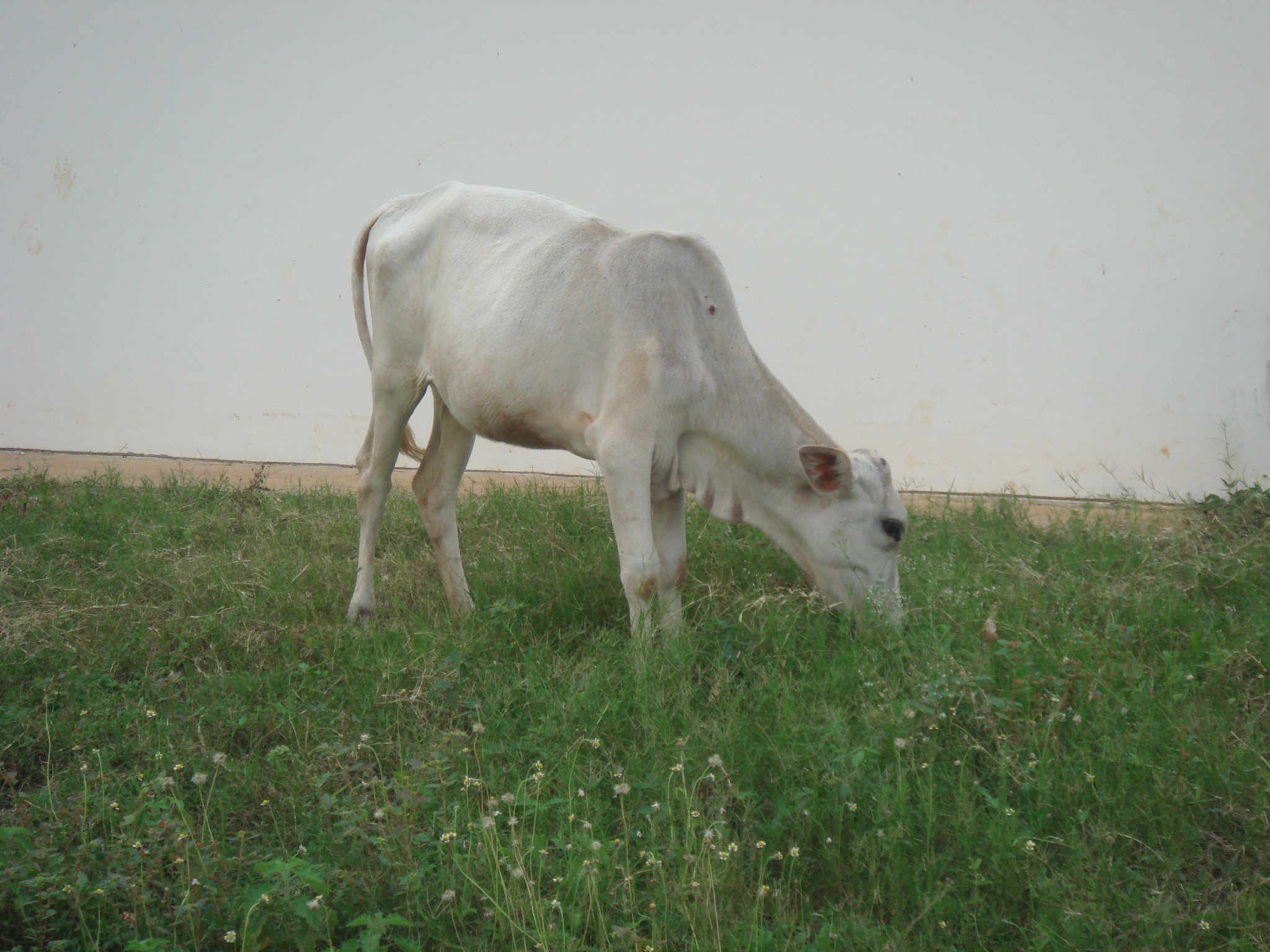
‘Ermintrude’

Gentlest cow I’ve ever seen. Lovely soft pelt, Big dewy eyes. She lets the kids stroke her. Due for the knackers yard this autumn. We’ve ordered a big shank of prime beef from Ermintrude’s left leg. Could be her right leg. I forget.

‘Lizard boy’

A loner. Difficult to approach.

NO PICTURE AVAILABLE

‘Ant’ and ‘Dec’ the bush babies. They only come out at night so all you ever see are two huge pairs of round, red eyes caught in the torch light, madly bouncing and tumbling around the mosque roof opposite us, emitting their ‘We’re on speed! We’re on speed!’ cackles. I’m trying to entice them into the backyard with over ripe bananas. I haven’t told Nadine it’s to capture one of them, leash him and train him up for tourist photos in Stone Town. I’ll make a fortune.

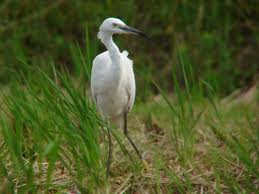
‘Slim’ the egret.

Hangs around in the morning with the gardener waiting for juicy morsels to be dug up. Either that or he fancies the gardener.

‘Rude Boy’ Raven

A disrespecter of everything. He lurks around the bins with his mates waiting for chucked out food. He usually manages to up-end the bins too and then brings his catch to our (tin) roof and proceeds to make as much noise as possible while dismembering it and spitting it out all over our backyard. I thought our kid was a noisy, messy eater. Rude Boy just about has the pinch on him.

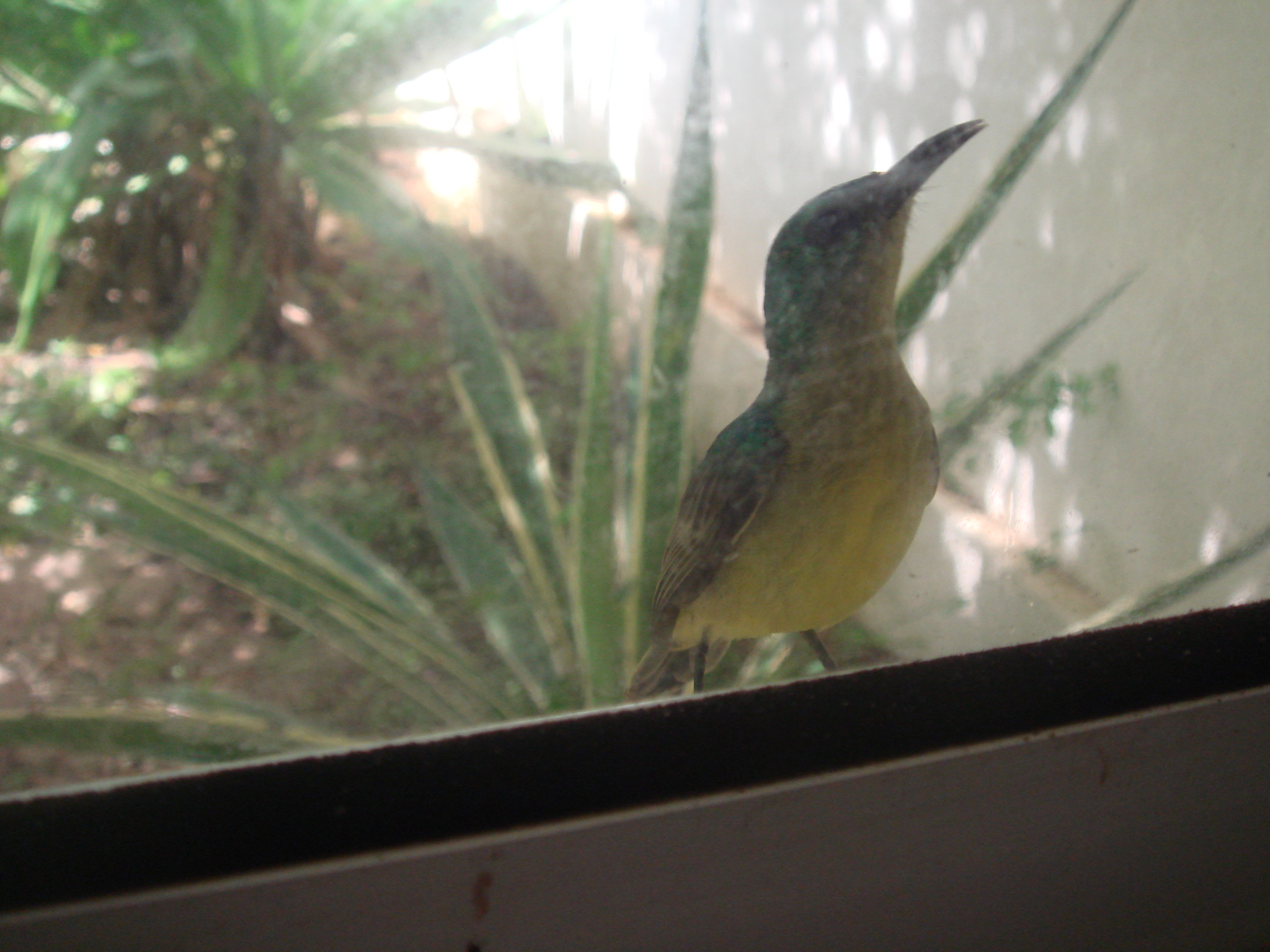
‘Billy whizz’ the sun bird

‘Billy whizz’ isn’t actually part of our household menagerie but a friend’s down the road. Daft as a brush. Thinks his reflection in the window is some other sun bird and spends hours doing his mating dance and trying to get off with it. So a gay, daft sun bird.

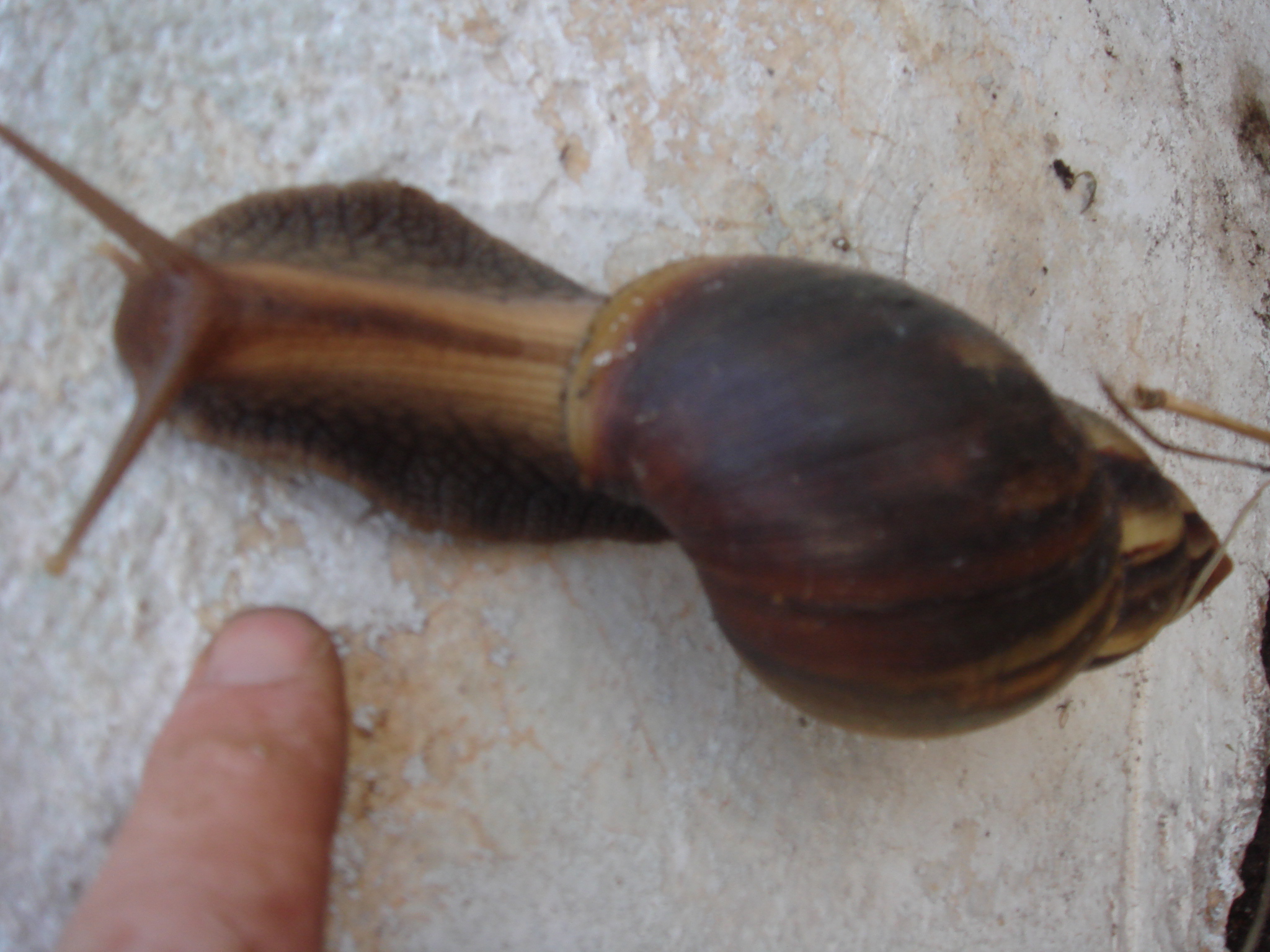
‘Lotta Goo’ the snail

Huge and slavvery. Spends her (no, I haven’t checked. ‘her’ is literary licence) time slithering around the confines of our small backyard plot of dirt eating snail food which judging by the size of her includes small children and stray cats. I just wish it included ravens. She also produces frightening amounts of slime. We’re  trying to make a garden but all it appears to be doing at the moment is glisten from the layers of guck Lotta lays down.

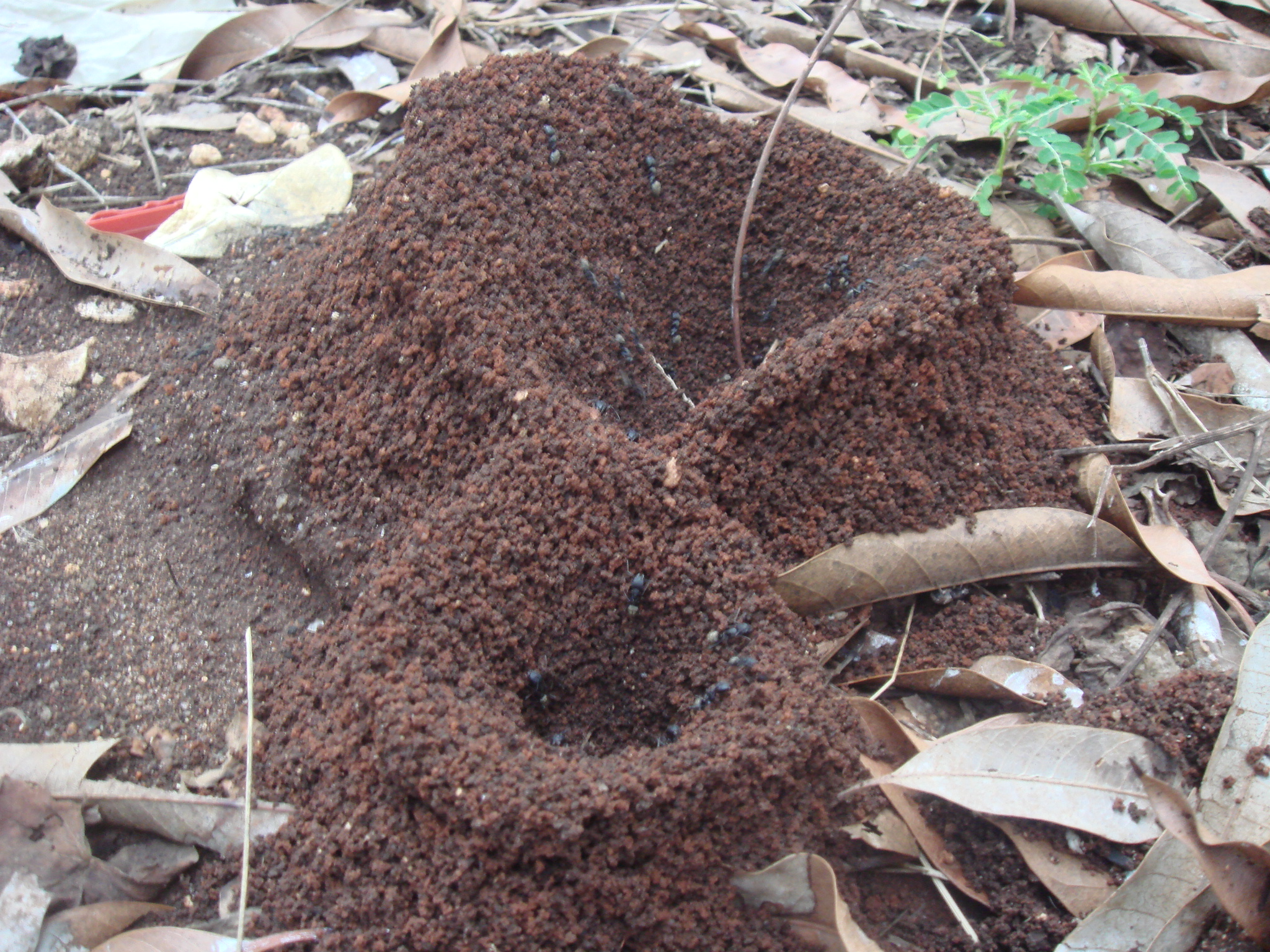
No name, just terrifyingly efficient.

Ants. The above is about the size of a football and was produced within a morning in our back yard garden. What with Lotta’s slime and these lot, it’s amazing we manage to grow anything.

‘Pinky and Perky’

They usually pitch up around 7 in the morning wanting scraps off the breakfast table. They bang their chins of the roof if we’re late. Another bloody racket to add to the long list in the morning.

NO PICTURE AVAILABLE (THANKFULLY)

There’s also something at night that we’re not too sure of. Whenever it starts, all the other noises stop. It sounds like a cat screaming, changes to the sound of something being throttled and then turns to a staccato hooting followed by soft crunching. Whenever we ask people what it is they just smile and walk away? We’ve agreed that the next time it happens Nadine will go out and investigate.

Editor’s note: We have discovered that one of the above entries is a red herring. We shall leave it to you to work out which.

Posted in Uncategorized | 4 Comments

You could win a carrier bag!

We have been a bit poorly of late, hence the lack of blog posts. At least that’s what Nadine said I should say as a good excuse for us not managing to get something written. I do actually have a cold or have just recovered. I don’t think it was a cold though. I was positive it was Malaria. I had all the symptoms. OK, I also had a runny nose, and was sneezing and coughing up phlegm, but who’s to say there isn’t a common cold variety of Malaria. It might have been overlooked. I could have been the first fatality.

Oh my God! the pimple’s gone malarial!

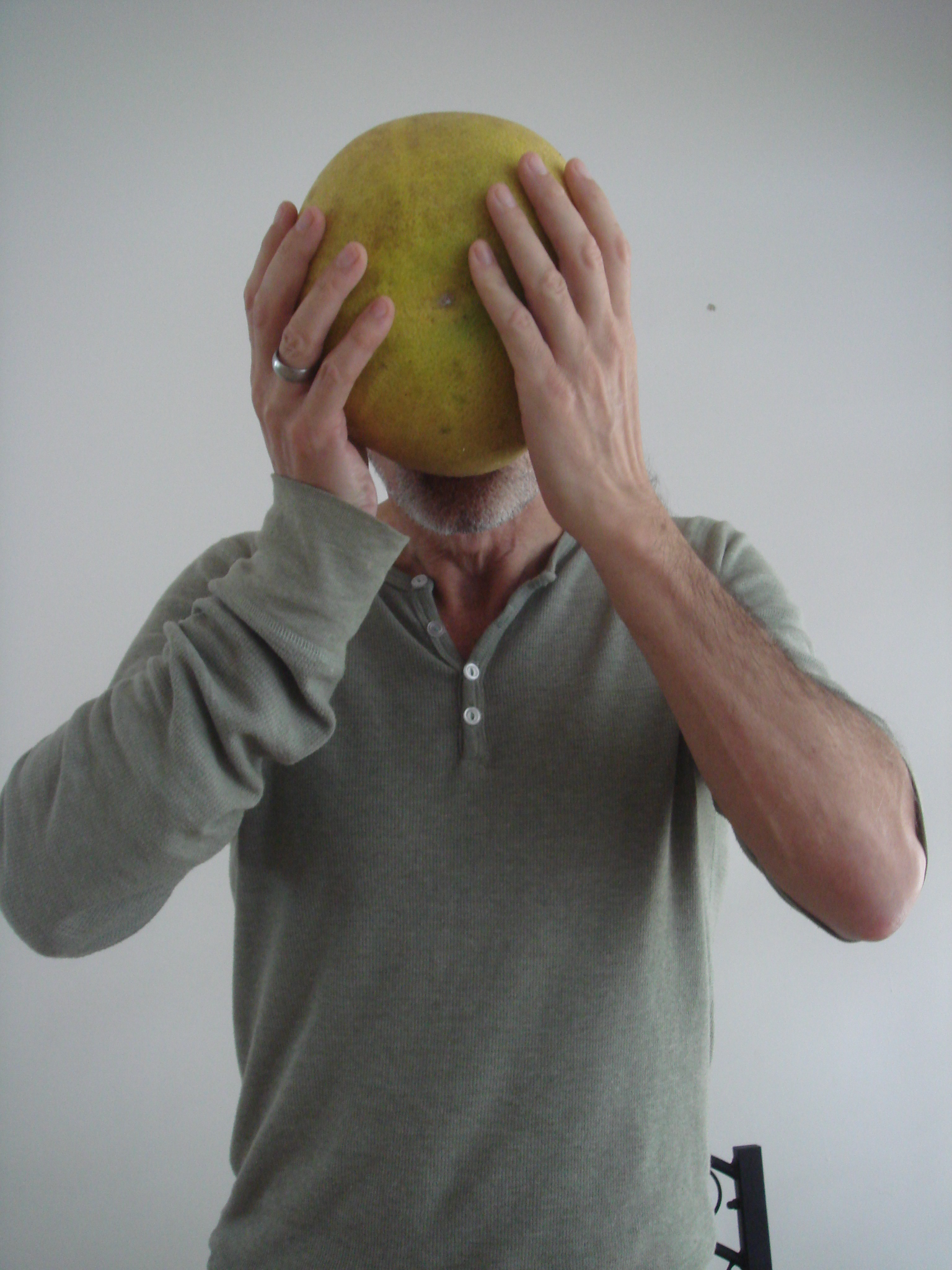
At this juncture I should point out that the above is merely a fiendishly clever photo-montage. Rest assured readers I remain a devilishly handsome wag of unblemished dashing good looks. Below will I believe, shed light on my clever dupe.

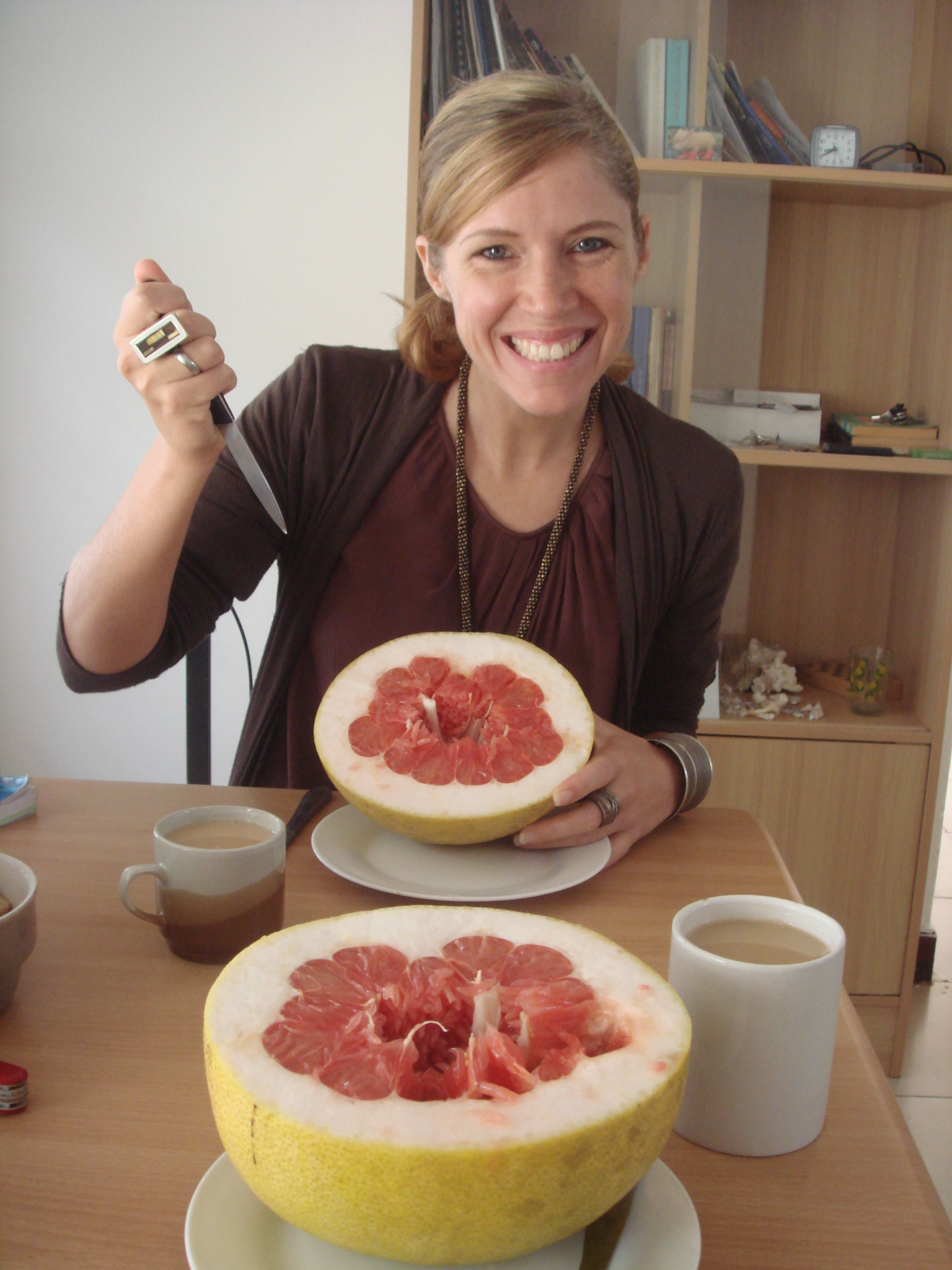
Yes. As I’m sure you all guessed, a ‘balungi’ or grapefruit! About the size of your average devilishly handsome head and tastes devilishly delicious too. A bit like a sweet  grapefruit. While Nadine opted for the ‘hack your way through it with a knife’ option I went for the more visceral ‘get your head stuck in there and start chomping’ method.

It was Nadine’s birthday a couple of weeks ago. And I remembered. So, what do you get the girl of your dreams in a country that has bugger all. Well . . . 

. . . bag of half melted Cadbury’s Chocolate Eclairs, a bag of Haribu Fruit Gums and a loaf of home made bread with real butter on it of course!

The Write a Caption Section

Go on, you know you want to. Best one wins a carrier bag.

Posted in Uncategorized | 6 Comments

Kung Fu ‘grasshoppers’

Success! A picture of our up and running ELearning platform!

A bit simple at the moment but it’s got everything we need to kick things off. We have high hopes. It’s taken this long to get things going due to a host of delays and things not working out. All of them every day events around here. You simply have to adjust and then work out ways of getting around them. Things like no staff or disappearing staff (as in gone for good to the mainland or some other posting with no more than a day’s notice) or limited staff without the requisite skills. No hardware, old hardware, cobbled together hardware on its last legs. As an example, below is where I’m used to working.

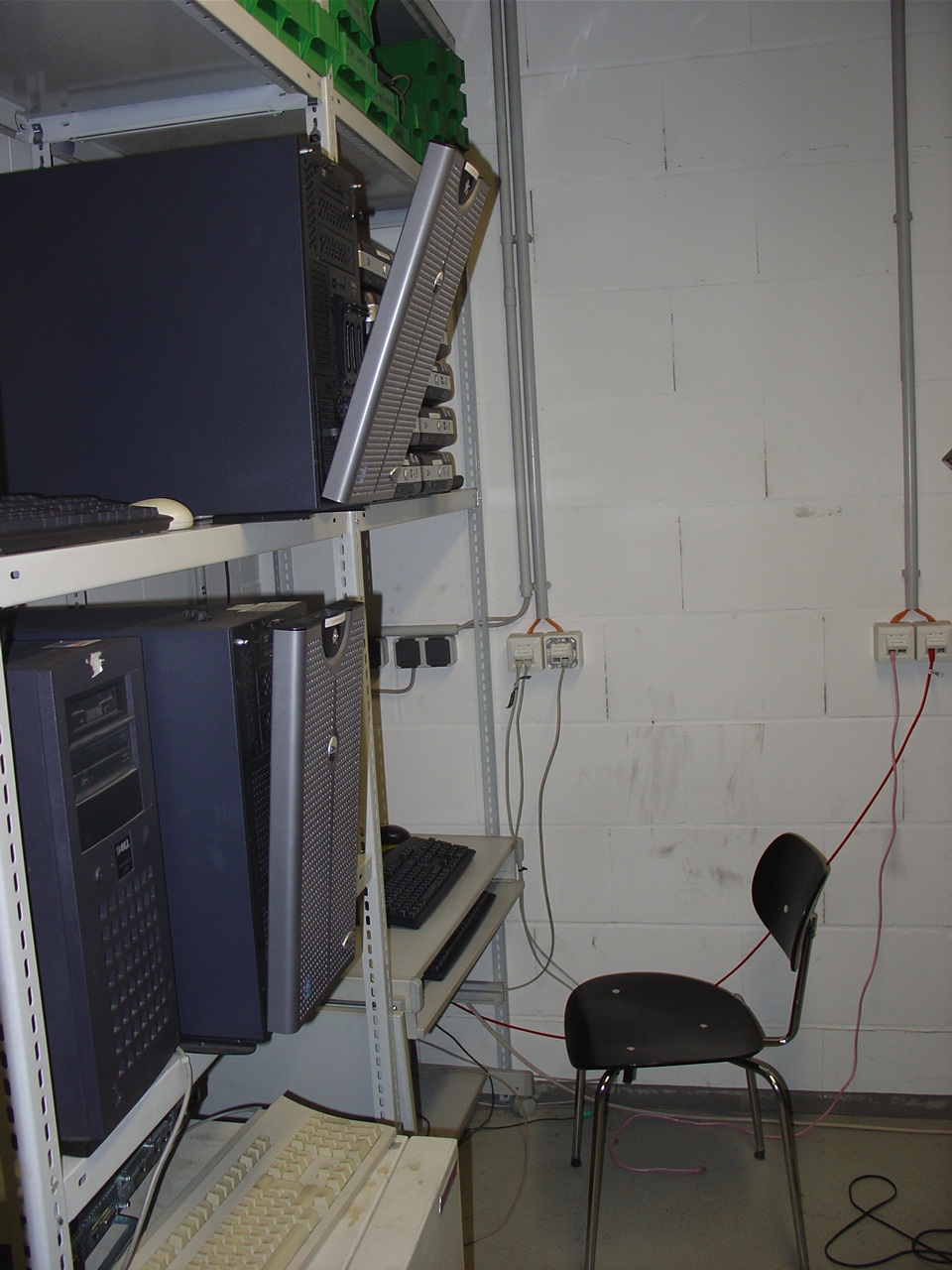
Above and below is the server room at one of our offices in Berlin.

The above set up would be seen in your average run of the mill organisation, medium sized office or college of about , let’s say 1000+ students.

The equivalent in Zanzibar.

OK, I’m exaggerating. It’s nowhere near that bad. Below is where we actually do all the techy stuff.

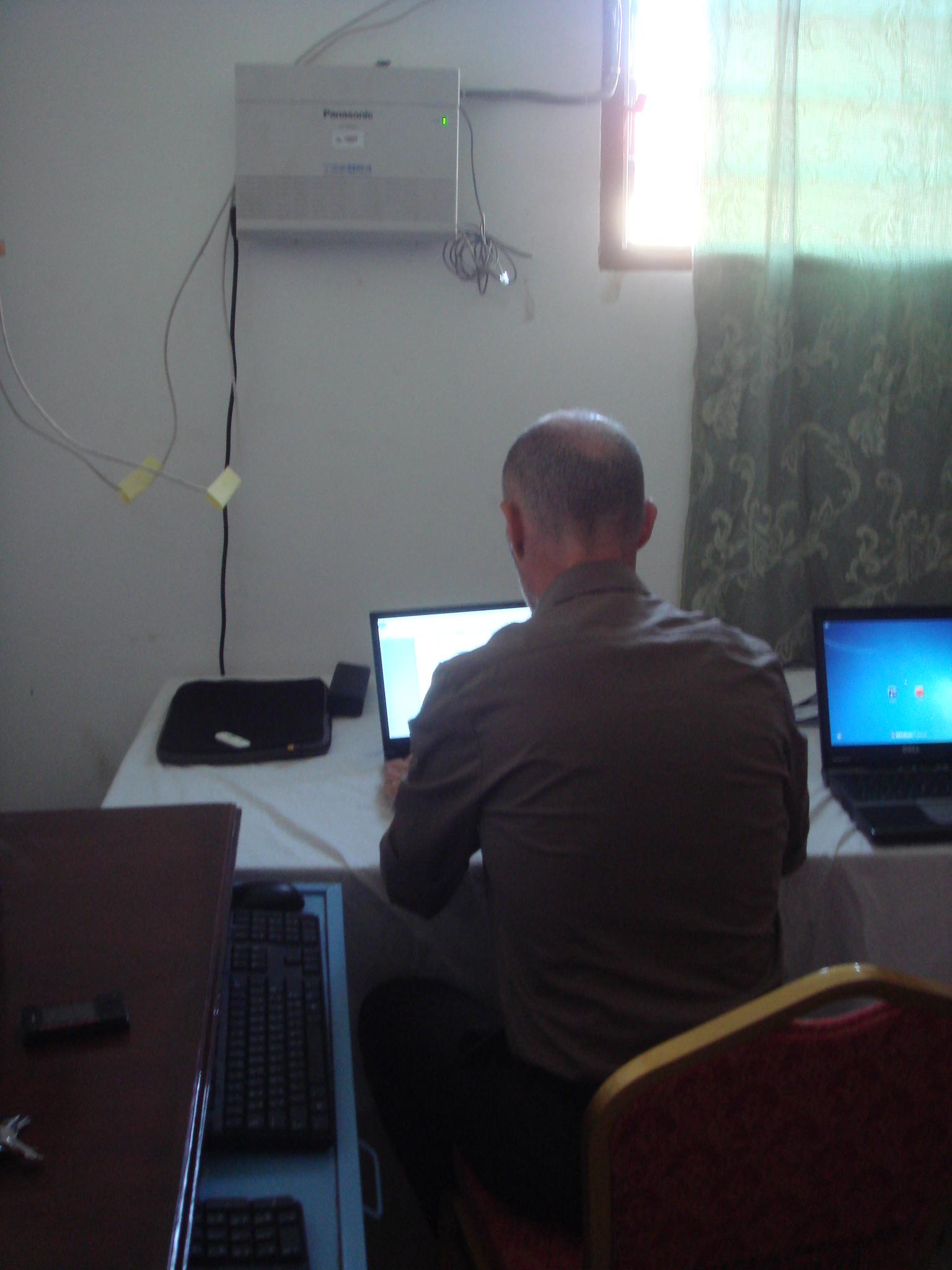
The College of Health Sciences server room (where we’re based).

 It also serves  about a 1000+ students but with the kind of kit you would use for a home network setup. Desktops instead of servers, simple ISP communication links instead of dedicated routing and networking equipment. It works. If you accept the limitations and are prepared to go with the ‘Zanzibar flow’, it’s fine. Don’t know about the curtains and table cloth. They’ll have to go as an interior design faux pas (they’re also a fire risk). The ants are a bit tricky too. You can’t get rid of them. They’re all over the place and continuously crawl in and out of PCs. When you type you’ve got ants popping out between the keys and up your fingers. Inside PCs they can cause short circuits and spark internal fires.  Dust is another one. Clogs up the internal fans. You can hear them wheezing away like old men.

We need to say at this point that our job isn’t solely about building an ELearning platform. To be honest we’ve only done that to more clearly demonstrate a method of learning that is very new to Zanzibar. The main aim is to capacity build so when we’re gone the skill sets and knowledge are in place for the Ministry of Health to make their own decisions and implement their own solutions, whether it be ours or something else. We’d much rather leave them with something small scale but with a sense of ownership and confidence to take it forward without us. That would be a success. Failure would be some fancy ‘bells and whistles’ solution that nobody understands or feels a part of. It would die within months of our departure. The whole donor/aid world is littered with them. It’s depressing as hell. Unused medical equipment gathering dust in hospitals because nobody knows how to use them or repair them or they came with the wrong plug. It’s nuts.

 And so to our ‘capacity buildees’. We’re still in the process of selecting potential project management, administration and online facilitator candidates. Below are some of my technical ‘capacity buildees’, my à la David Carradine Kung Fu ‘grasshoppers’ who will receive the benefit of my ’Confucian’ ( Confucing?) wisdom.

Kung Fu grasshopper number 1 is Vuai (on the right of me) and Kung Fu grasshopper number 2 is Hafidh (on the left of me).

 Lucky, lucky people, I hear you say. Yes, some of you have already been fortunate enough to experience first hand my prodigious font of knowledge, a knowledge that grows and matures with units of alcohol consumed. Unfortunately, alcohol assisted sagacity is not an option for most of my trainees (Islam doesn’t see the funny side of booze). A shame.  Still, we’ll see what we can do. Progress reports later.

 And now, as brief introduction to my own personal teaching philosophy, a classic example of Master Po Kung Fu wisdom:

Master Po: [after easily defeating the boy in combat] Ha, ha, never assume because a man has no eyes he cannot see. Close your eyes. What do you hear?

Young Caine: I hear the water, I hear the birds.

Master Po: Do you hear your own heartbeat?

Young Caine: No.

Master Po: Do you hear the grasshopper that is at your feet?

Young Caine: [looking down and seeing the insect] Old man, how is it that you hear these things?

Master Po: Young man, how is it that you do not?

You can’t knock it. You can build servers and area wide networks with this stuff.

Vuai with the tell-tale Kung Fu ‘grasshopper’ look of enlightenment after my recital of a Master Po Kung Fu quote just before take off. Very strange, he tried to jump once we were airborne.

And, since I’m in the mood, I shall now give you a line of poetry:


“<IfModule mod_fcgid.c>FcgidMaxRequestLen 26214400”


All right, all right, it’s a line of otherwise gibberish computing code. This little snippet though just saved our newly born ELearning platform. Without it, its first fledging steps would have been doomed to an online early death. Took me ages to work it out. Forced Nadine out with me to the bar afterwards and put her through an hour or so of explaining the incredible mind exploding intricate details of ‘FastCGI implementations on Apache web architecture’. She didn’t speak to me for 3 days. Master Po sagacity aftershock. I’ve seen it before.

Posted in Uncategorized | 8 Comments

It’s usually the grim things in life that make you sit up and start thinking about your own life. You might have heard on the news of the passenger ferry capsizing off Zanzibar. It happened just off the coast of Unguja (Zanzibar is an archipelago consisting of two main islands Unguja and Pemba), practically in front of us, next to a smaller island called Chumbe. We don’t know the full details but it was one of the older passenger ferries that probably didn’t comply with whatever safety standards are in place to prevent such things. Probably had too many people on board most of whom wouldn’t be able to swim. Probably with a crew who weren’t trained for such scenarios. A rough sea would have done the rest.

All things here seem to be forever on the verge of a break down, whether it be your cooker or fridge or the local daladala buses or boats that ply the straights between Zanzibar and the mainland. Electric shocks, sparks from appliances, the collapsing of buses in clouds of black smoke are common place events. It creates a latent suspicion even fear of anything mechanical. It’s a fear and edginess that grows with the size of the object. We had an example of it recently, a daladala we were on ground out its last gear and rumbled to a halt. Daladalas are small and open. No more than twenty people on board. They normally take seconds to fill up with or disembark passengers. There was a faint whiff of petrol and fumes. A bit of smoke, and suddenly a mass explosion of people fighting and scrambling to get to the door (3 feet away). Instant jam, with shouting, flying fists and crying children. It was a bit of an eye opener for me. It’s not hard to imagine what would follow on a boat with almost 300+ people and exits, probably blocked with baggage, tens of metres away.

A similar disaster happened last year, between the straights of Unguja and Pemba. A ferry loaded with over 1000 people. Over 400 died. It was incorrectly reported in the western press as only 200 deaths on a ferry of 400, buried somewhere down in the pages. As far as I’m aware this capsizing hasn’t been reported on the BBC international channel news and its nowhere to be seen in the online tabloid editions such as the Guardian. It seems that in this part of the world only deaths of biblical proportions capture the front page imagination of the western press. But here isn’t the place to go off on a rant about western perspectives on the value of non-western life.

Survivors and bodies are being sent to the local hospital up the road from us. The college stopped all classes and sent all of the students there yesterday afternoon to see if they could be of assistance. We’ll find out this morning a few more details of what’s going on. We’ve been to the local hospital a couple of times. You don’t want to know. Don’t think medical facilities, cupboards stocked with medicine and the like. The place still lacks clean sheets, mosquito netting, chairs, glass in windows. It’s not a place to be sent to with anything major.

So, not a happy blog but it’s got us reflecting again on how lucky we are to be healthy and safe and with the options and opportunities most people here and elsewhere can’t even begin to dream of.

Posted in Uncategorized | 2 Comments