Of flying foxes, mangroves and mud crabs

John’s been telling me off because I am so late with this one. My sincere apologies, Asche auf mein Haupt, je suis désolée, pole sana!

So, finally: Some reflections on our fantastic visit to Pemba-  yes, it does seem ages ago now, but we did have such a good time, it’s still worth writing about.

Pemba is 50 km north of the archipelago’s main island Unguja, where we live. It’s more conservative and less developed than Unguja, there are only a handful of hotels. It is also, in our view, the (even) more beautiful island.

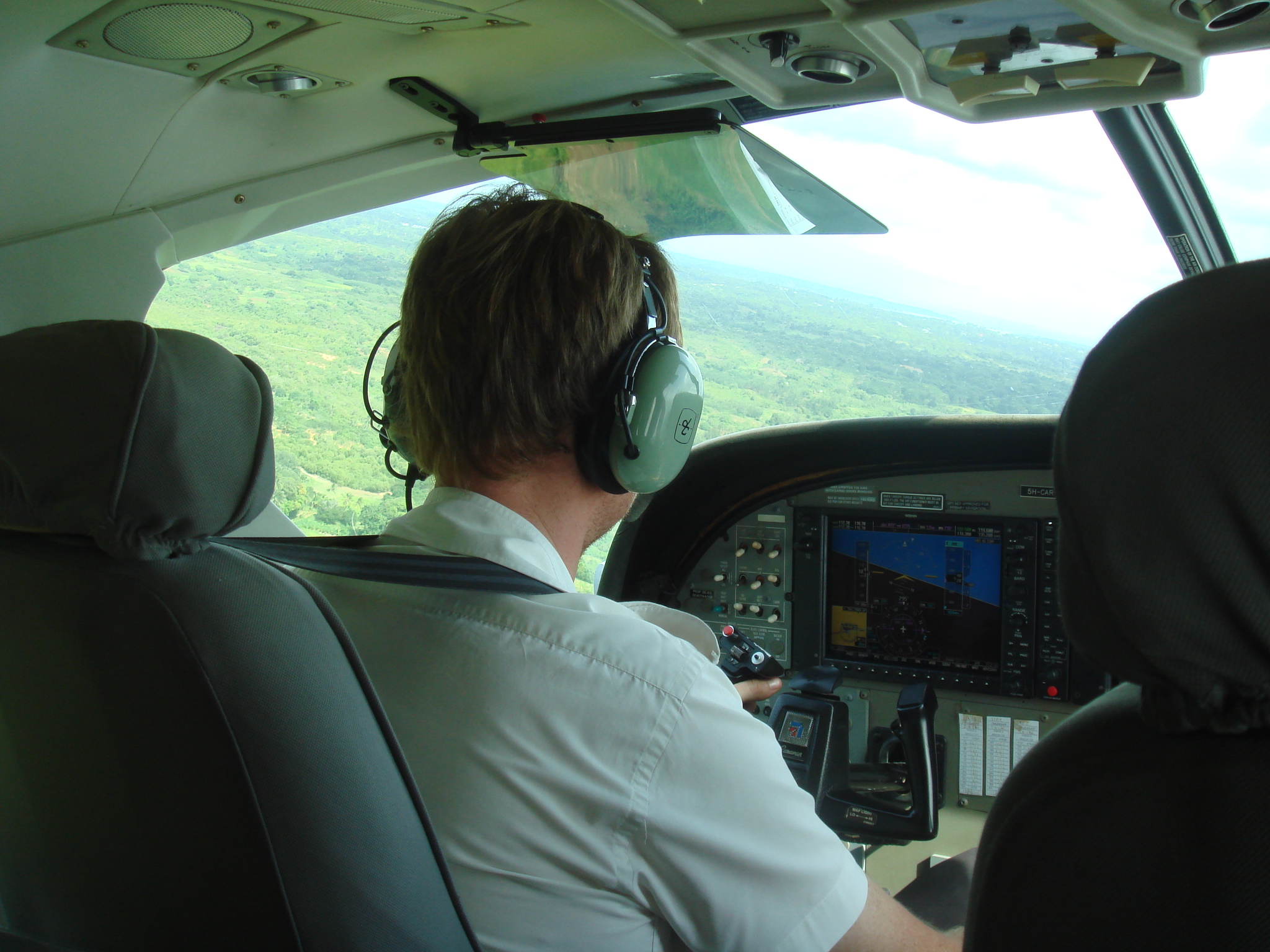
This was our plane:

I think it caters for up to 18 passengers. Hovers just above the cloud line after take-off, and when it flies through clouds or rain, boy, do you notice it at times. I can think of a couple of you out there who may not have appreciated that flight. Luckily enough we both don’t suffer from a fear of flying as long as things don’t get too exciting (I do have my limits, I’ll admit it),but the bumpiness was acceptable and the whole trip of 30 minutes was quite a treat. As you can see one could look right over the pilot’s shoulder, straight into the cockpit and beyond:
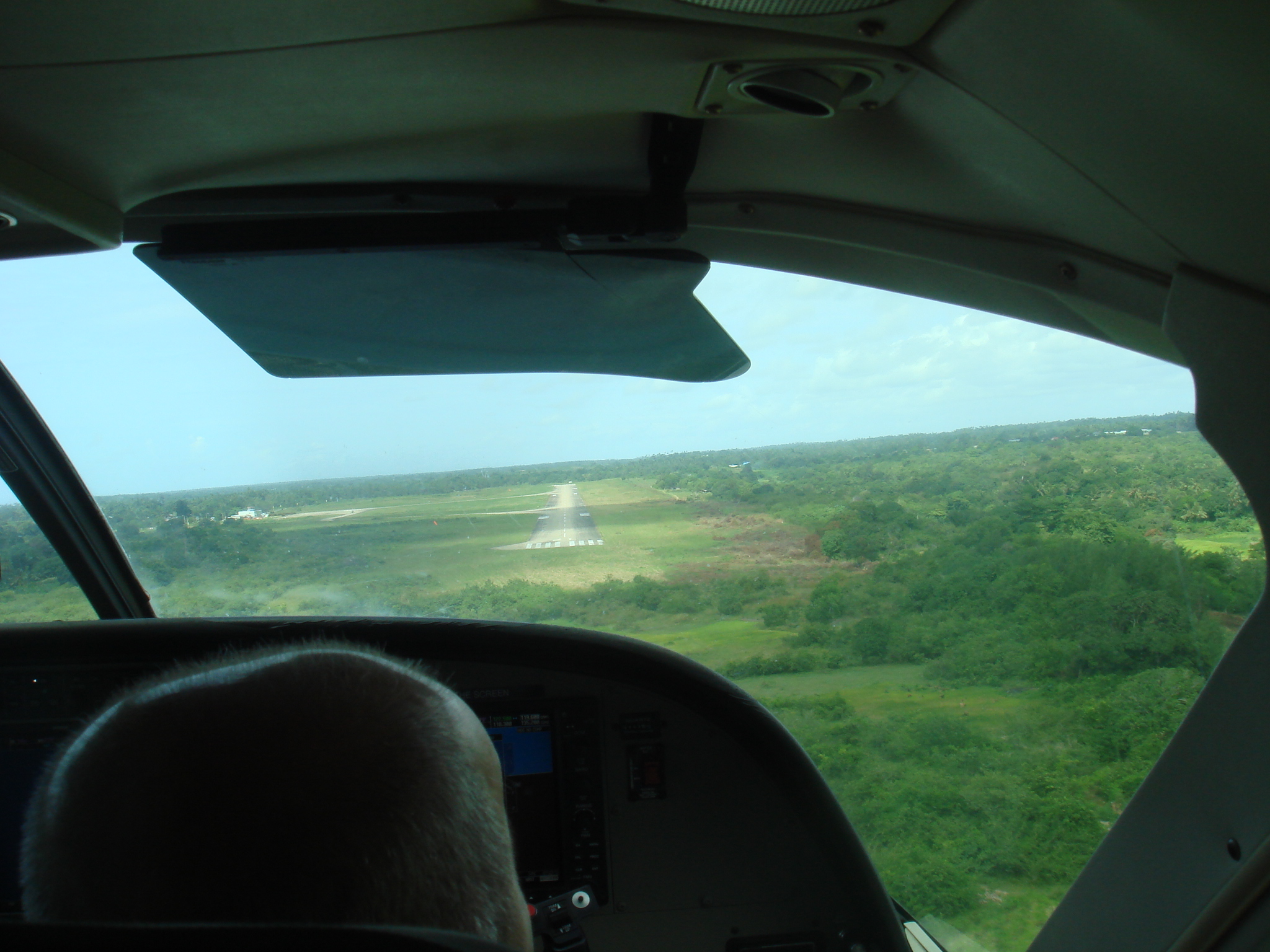
Looking down onto the runway

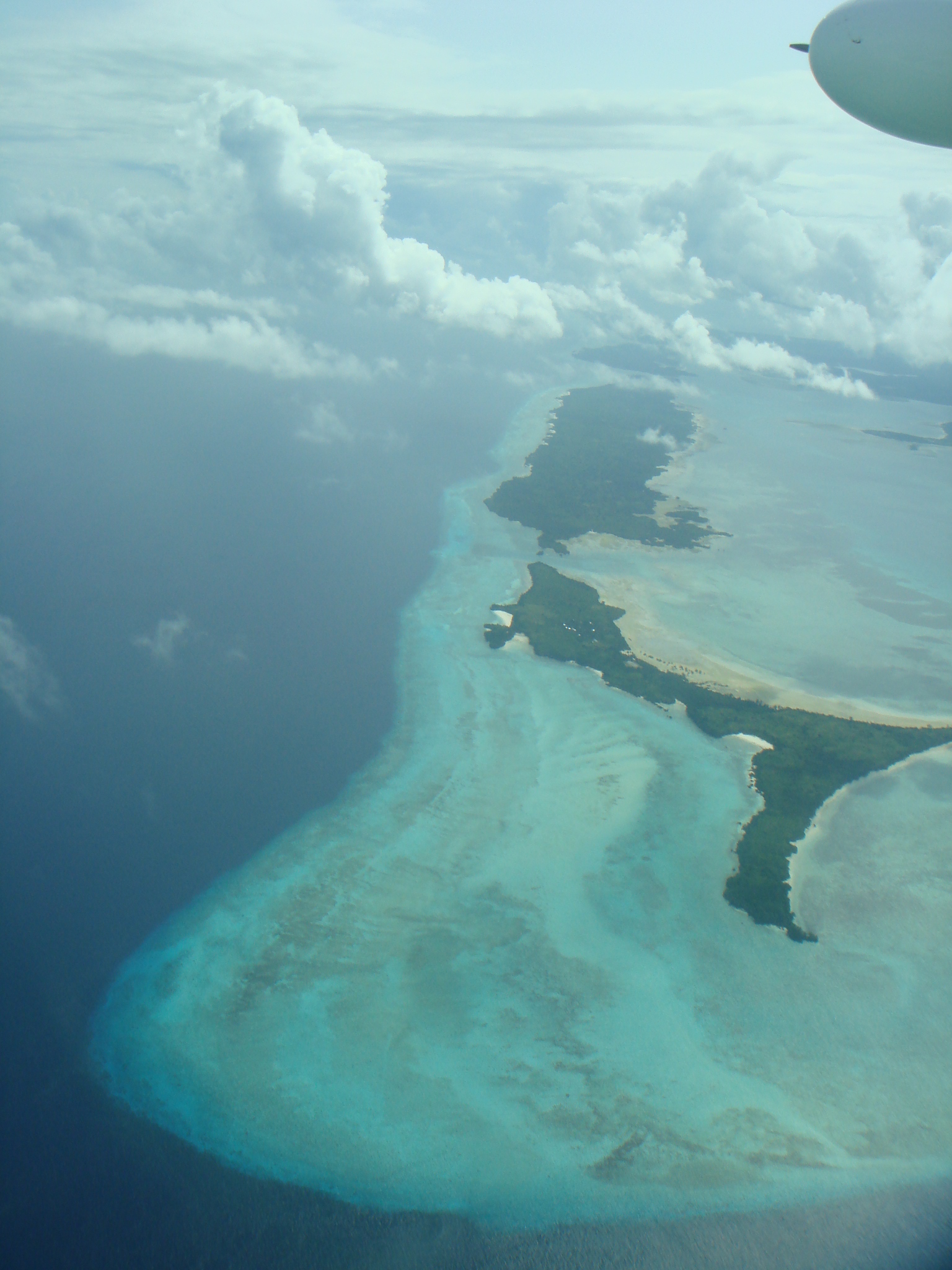
Here’s just a couple more impressions from the flight: The colours are  more impressive in reality:


The island  is known as ‘Al Jazeera Al Khadra’ in Arabic – the Green Island. It is also called Tanzania’s food basket because a lot of the fruit you buy in Unguja or Dar es Salaam actually comes from Pemba. There are fruit trees everywhere along the roads (why the Pembans  are still so poor I do not know. Apparently they export so much of their fruit that there often is a shortage on the island itself). Another significant difference to Unguja are all the small rice fields everywhere – together with bigger palm trees, the little hills and winding roads (Unguja is very flat and in parts quite arid), and the rich green colour everywhere it made a wonderful reminder of Indonesia for us. One day we will manage to get a job there, I know!

We were lucky to get to see quite a lot of Pemba because we had to travel right across the island, kreuz und quer, covering visits to 5 hospitals in 2 ½ days.  Everything was really well organised by our Pemban Ministry colleagues, a welcome committee was awaiting us with a car, on time, at the airport, with a clear plan about what was going to happen. We were rather impressed. I did have to be careful about handing out the petrol money in chunks though as apparently the availability of the Ministry car was being made full use of during the evening and early morning hours…

Anyway, after meeting the key players from the Ministry on our first afternoon we found our accommodation: The VSO volunteer representative for Pemba, a volunteer within their education strand from the Philippines was kindly putting us up in his house, a typical shamba, “farm house”: Living and bedrooms in front, a back yard and beyond that a separate kitchen and toilet area.

We were really spoilt, being hosted by a colleague who is both an excellent cook and an upliftingly (if that is a word) positive-minded person.
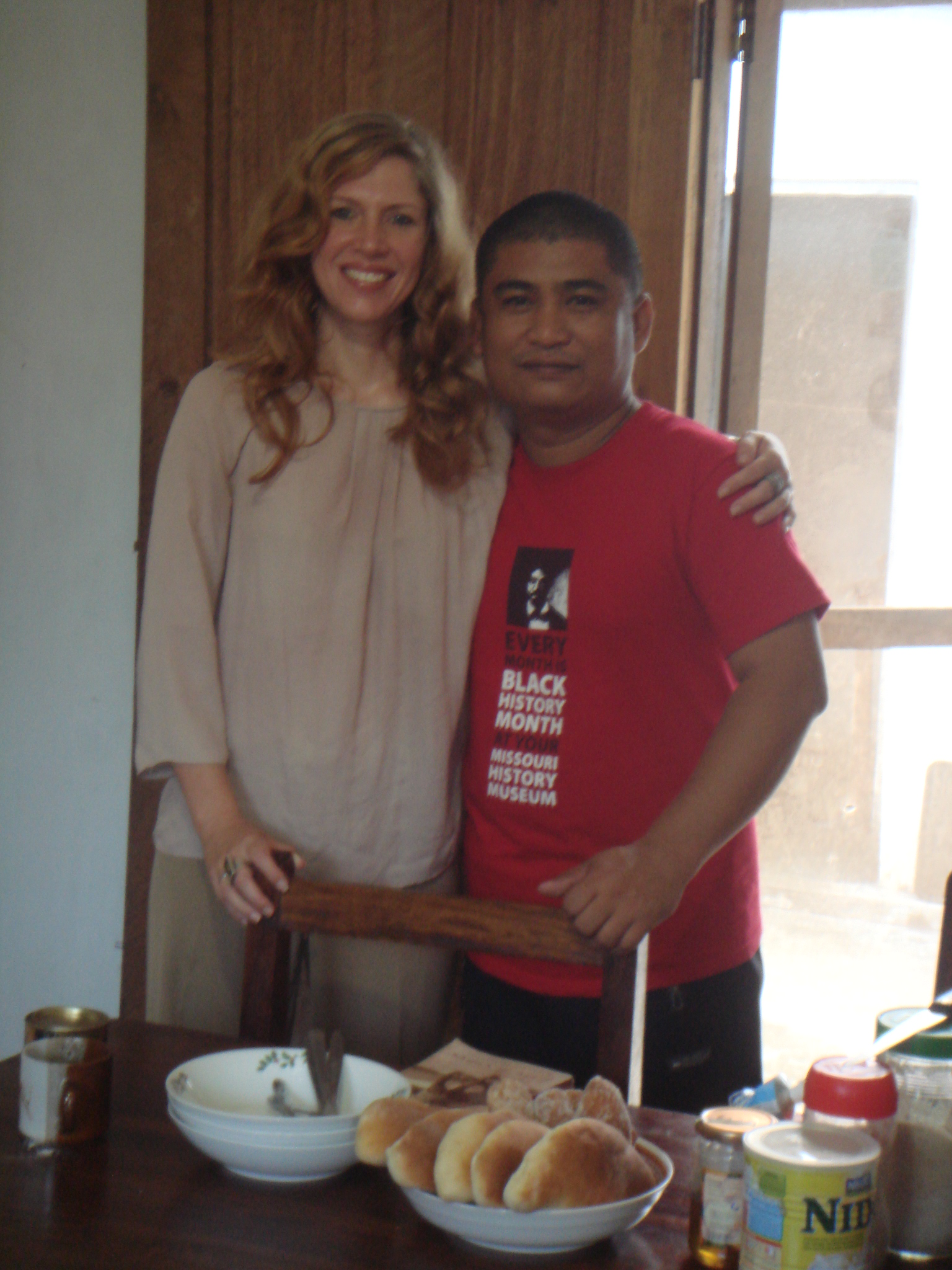
Before breakfast


Having volunteered for about three years he has not only supported teachers and school administrators in his day-job, but also planted mangroves by the sea to restore the biological equilibrium in the vicinity; he regularly hands out condoms for women who are desperate to ensure they do not become pregnant for the ninth, tenth, eleventh time (I am not exaggerating), and has managed to reveal corrupt structures at work without getting himself kicked out of his job. We were intrigued, not just by the  afternoon snack he served us!


Err, these ones we didn’t eat, only admired: Flying Foxes as they call them, the famous Pemban maxi-bats.

Sorry, the size of the above photo doesn’t really help, but if you look closely you might notice that the bats have huge wings, they really are enormous!

Our stay did also remind us of how lucky we are with some aspects of our accommodation: I decided I couldn’t wash my hair there because the daily water supply consisted of two or three buckets delivered by a villager directly  from the well (how far it had been schlepped I do not know). I probably would have used half to two thirds of the daily supply by washing my hair. Have been wondering what I would do if we had so little water –  I guess I’d really need a radical hair cut!

The visits to the hospitals went well – we’ll be starting off with equipping one hospital with some computers, as a pilot, and working with staff on how to maintain the place and give support to learners.
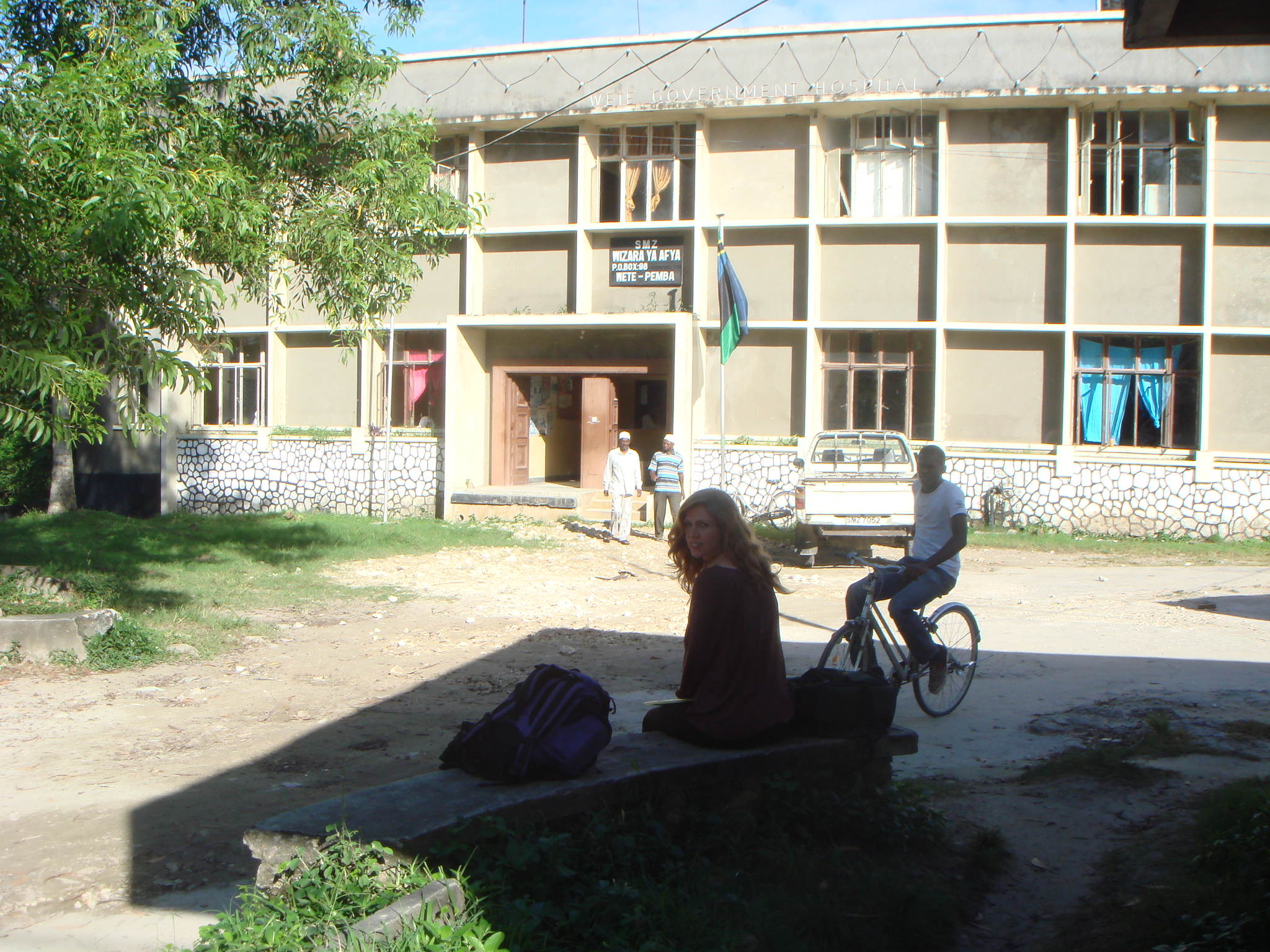
Waiting for our colleagues at our pilot hospital

4 other resource centres should follow next year. Staff will be able to access English, typing and ICT courses, do short health courses and longer upgrade courses. The big experiment will be the College teaching 5 second year student nurses from this November to January 2013, via e-learning. Lots and lots of steps that need to be in place before then (including lots of training) but with some luck it’ll work. We really enjoyed dealing with an active team that are organised, committed and help to make things happen.

Fingers crossed that together we’ll be able to put our plans into practice.

We’re already looking forward to our next visit, hopefully in August or September. Perhaps we’ll be able to stay on, rent some bicycles and roam around the island a bit, get some photographic proof of those beautiful rice fields for you, that would be nice….
Posted in Uncategorized | 2 Comments

Photo Fry Up

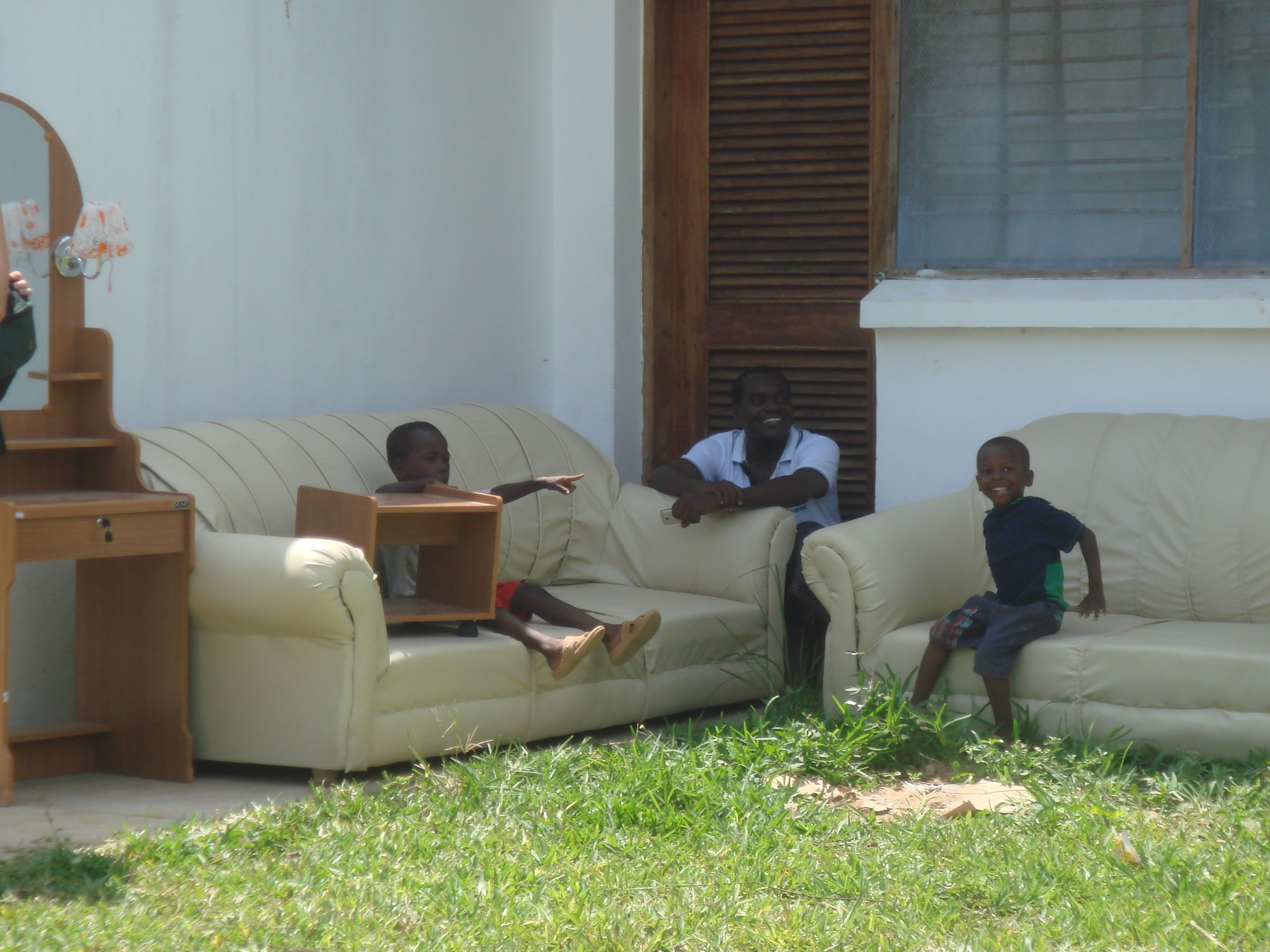
The furniture arrives. Plus neighbour, plus two cheeky little buggers who are always trying to get into the house and at our secret stash of balloons. We’ve told them only those who can count to ten and back get a balloon. No chance. (update: the little sods came back, stood on the porch, calmly counted to ten then squealed ‘balloon’) Next balloon goes to those who can count from 1 to 25½  and back. In 3s.

This was our first cup of tea and a biscuit after knocking the place into some sort of habitable shape. Actually, it was probably our first cup and tea and a biscuit since arriving in Africa. ..smashing, Grommet! Bit of cheese?

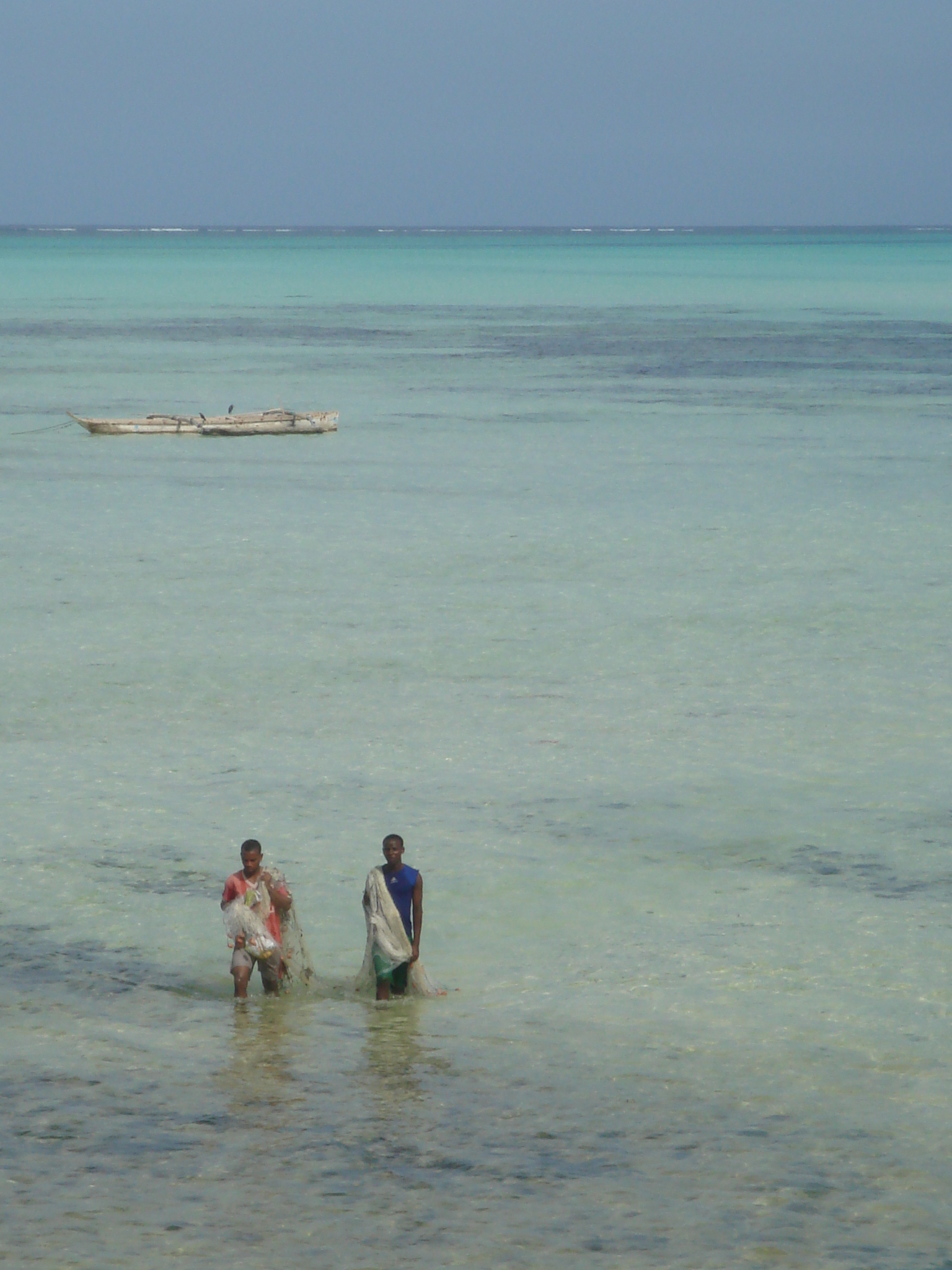
A contrast photo. Crystal blue waters. A snorkeling paradise. Two knackered fisherman who probably can’t swim and definitely couldn’t give a toss whether the waters were crystal blue or green with spots. Theirs is a hard, hard life. They often go fishing at night with lanterns. You can see their canoes and dhows dotting the horizon like long chains of fairy lights. The lanterns confuse the fish into thinking it’s a full moon. And full moon for a fish around here means get your flipper over time. Their favourite place for fish nooky is near the surface so they’ll naturally start swimming towards the light. You know what’s coming. Love is cruel. As soon as they reach the surface, lips puckered, the fisherman wacks them over the head with the lantern and scoops them into the boat. He scoops them out with nets actually but you get the picture.

Like I say a hard life but at least a life where you can earn a living, at least for now. Apparently the scourge of African local fishing is getting hungrier and destroying more and more of the local fishing habits. The scourge? European trawlers. To be more precise European appetite for fish which is then supplied by European hi-tech long range trawlers. Completely illegal. The trawlers skulk down from the North Sea and Med fleets and fish at night, turning off their lights to avoid detection which also leads to fatal collisions with local fishing boats. Apparently the whole Somali pirate business was caused by European trawlers wiping out the local fisheries off the North Eastern coast of Somalia and well beyond. The local Somali fisherman faced either starvation or doing something else. Nicking stuff back from the people that nicked stuff from them seems fairly reasonable in that light.

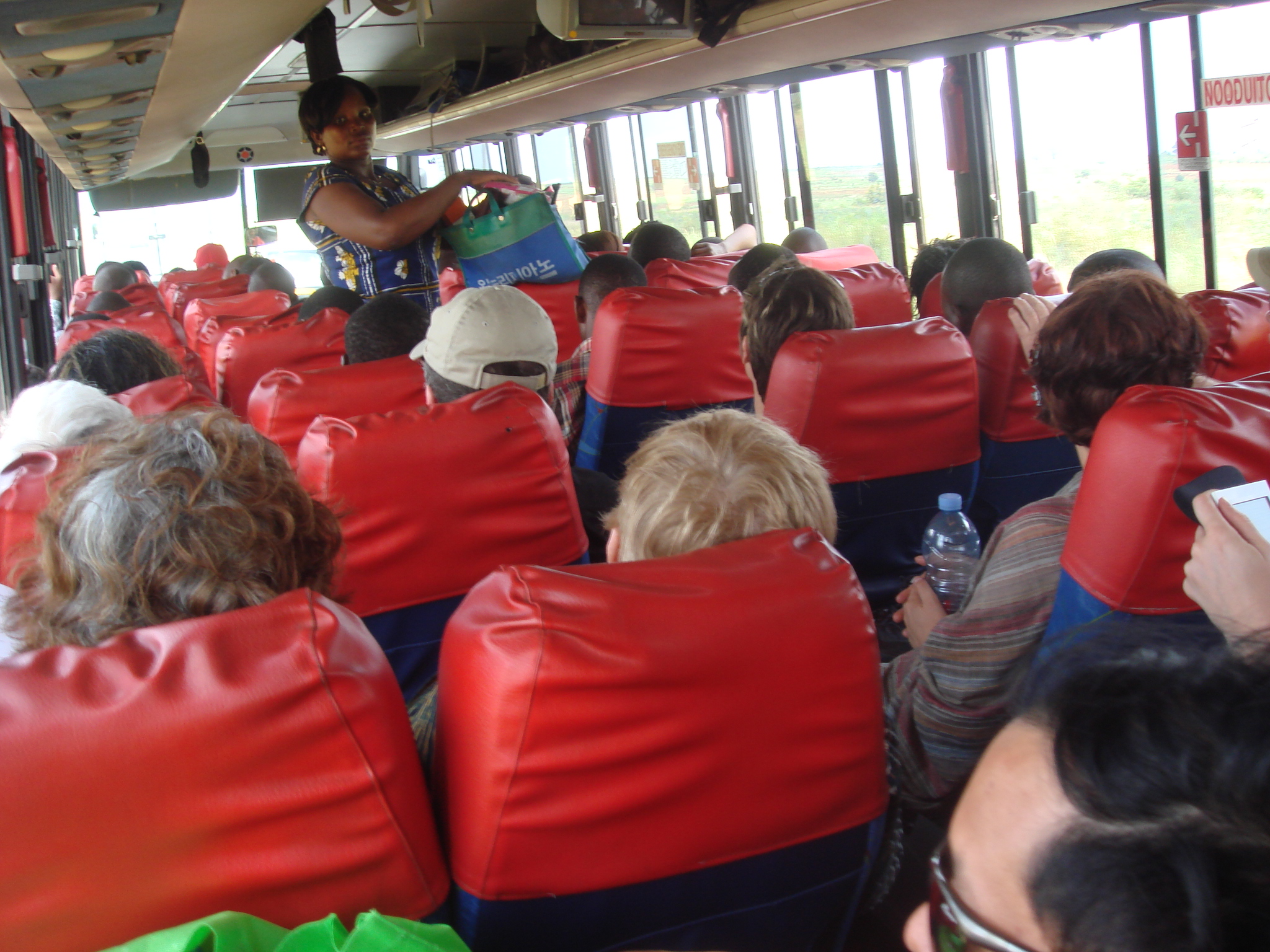
Same size buses as hours but if you look carefully you’ll notice 5 seats to a row not 4. There’s actually a 6th and 7th row of seats outside the bus, one row on each side sort of like stabilizer wings. A bit drafty sitting in them and overtaking can be a bit hairy but at half the price, very popular.

The woman standing in the aisle, all 5 inches of it, was a sort of a bus Avon lady. She got on at one the of stations and proceeded to pull ointments, lacquers and assorted unguents from her bag. Each one preceded by an elaborate speech (didn’t understand a word of it but it sounded impressive. Clearly she had in her possession the sort of lacquer and ointment that could change a person’s life). Not one of us purchased a thing from her. Poor woman trudged off, head hung low at the next station probably thinking ‘Why do I always pull the bloody whitey bus?’

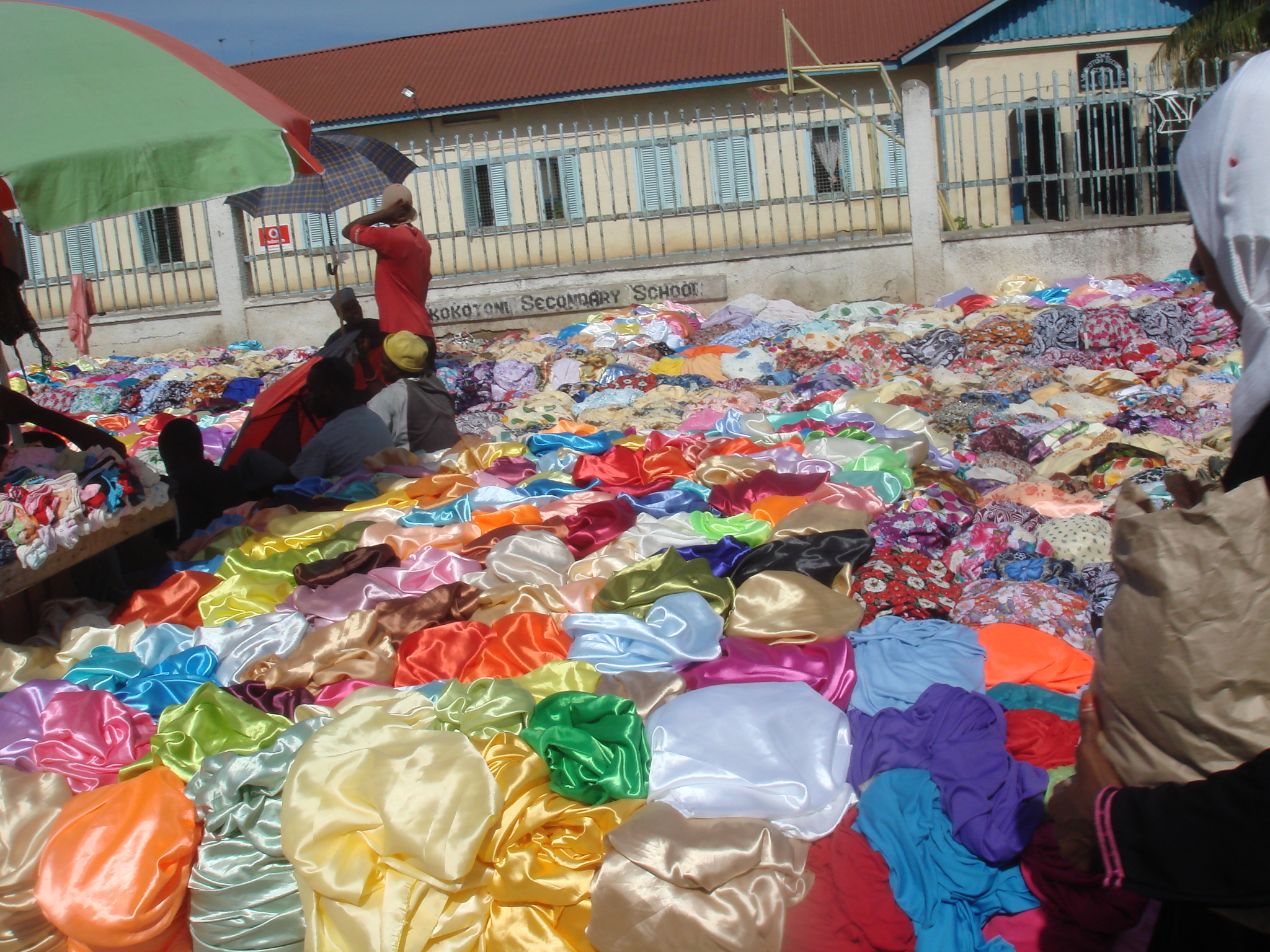
And sometimes on a bright sunny day you turn a corner and kapow! A town cloth market.

Good shot eh? I think so. It’s one of the 18th century buildings belonging to a small cluster that were set up by missionaries to house freed slaves. Just around the corner from us. Zanzibar was the largest slave trading post in East Africa. At its height around 50,000 slaves were passing through Zanzibar every year. Estimates only cover human beings that survived the journey by the way. Arab traders brought huge human trains in from the African interior. As well as places like above there’s also a linguistic ghost image from those times. The language of counting, sorting and moving slaves back then was all done in Arabic, the language of the traders. And numbering, directions and time in Swahili to this day is still in Arabic, or heavily influenced by Arabic. There you go. You learn something new every day.


Posted in Uncategorized | 4 Comments

Travels and celebrations

So much going on we need to play catch-up:

I travelled to Nairobi with the Head of Human Resources from the Ministry last month, for a flying visit (less than 24 hours). We went to meet representatives from AMREF, a prominent African Health NGO that was founded in the fifties by some British medics who first introduced the “Flying Doctors” across Africa. In recent years they have developed and implemented an e-learning programme for upgrading nurses from certificate level to diploma level while they’re still in post, and they’ve already managed to get an impressive 4500 nurses through the course over the last couple of years – I need to mention that many of these students will have never come near a PC in their life before, a situation we will be facing with our in-service learners, too. Anyway, turns out we could have stayed closer to home (their Dar es Salaam office that is) because AMREF are currently supporting the Tanzanian mainland Ministry of Health and Nursing Council in setting up the same kind of programme. Hopefully we’ll be able to piggy-back on that initiative here in Zanzibar. Just in case you were wondering: Although Zanzibar is a part of Tanzania it is autonomous enough to have its own separate Ministry of Health. Hopefully we can support our colleagues in building stronger ties with the mainland ministry.

Nairobi: Just some random impressions of my short stay (obviously very limited and I’m aware I may not be fair to the place – some of you know it well and may want to paint a different picture):

  • Never been to a place with so much pollution from cars before. Five minutes of walking along a main road and you just want to get back inside, because your throat is sore and you are gasping for air
  • Stark contrast to laid-back Zanzibar where I always have to pace myself because I am moving three times faster than anyone else around me: Reems and reems of people marching along the roads at quite a pace to get home or to work, with probably several  miles to go – even at 5:30 in the morning on our way back to the airport
  • Very professional and service-oriented set-up at AMREF (and very sharply dressed, business-like people!), quite an unexpected experience
  • The little guest house, a bit like a Bed and Breakfast, in one of the closed off compounds seemed oddly British to me: From the set-up of the house to little things like door handles, to wardrobes, to faucets on the washbasins and the flush on the toilet, even the temperatures were a lot closer to a British summer than anything we’ve experienced out here – a bit mind-boggling the whole thing).

Anyway, next came John’s birthday – the birthday surprise being a pack of German Werthers Echte sweets from Nairobi airport. They turned out to be quite different from the ones he liked in Berlin but he was good about it just like he was good about enjoying the  lemon cake I had baked without scales or a mixer, or a zest grater..….

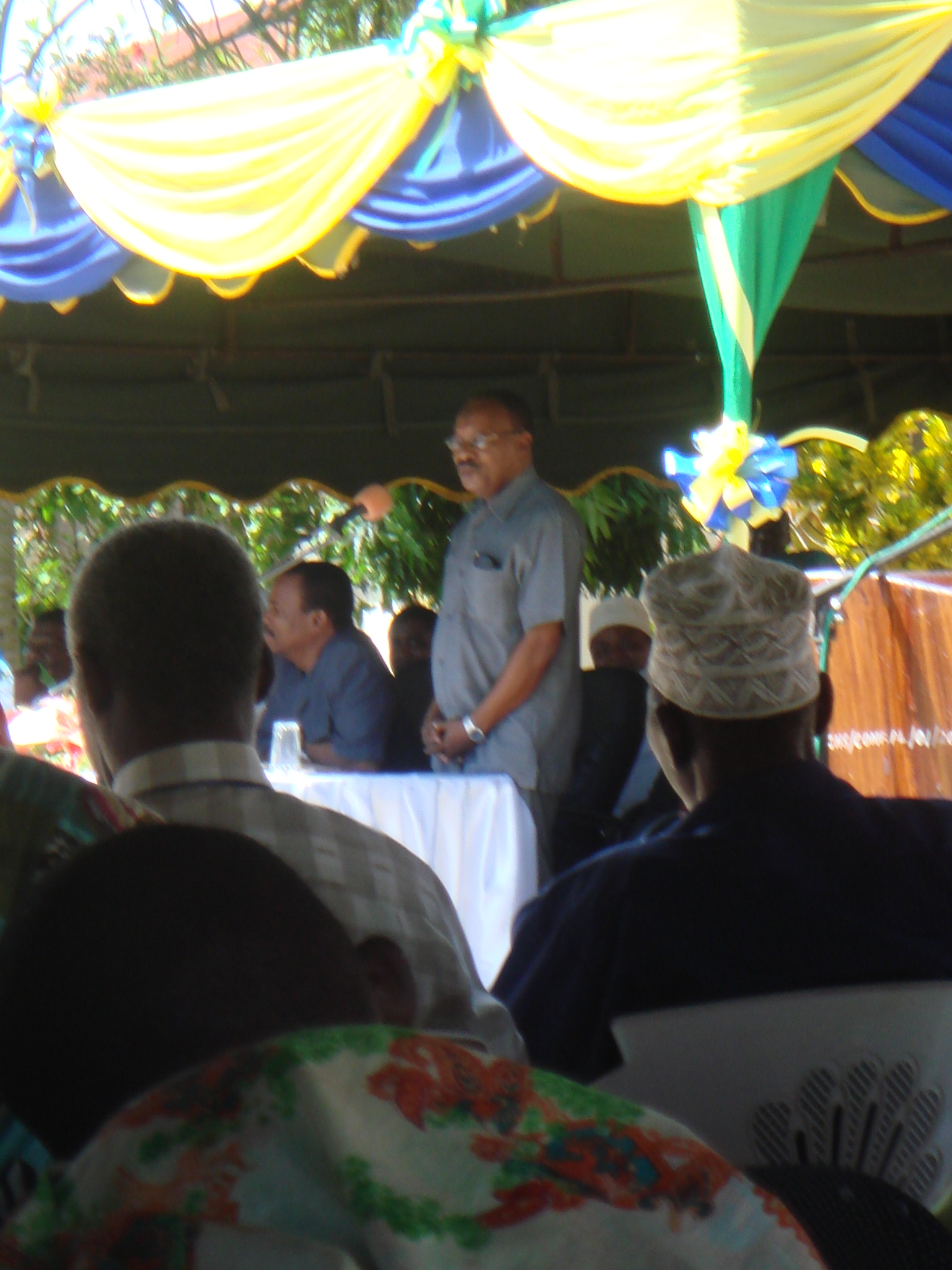
And next we were a part of our College’s graduation ceremony. Ah, if only our Kiswahili were better to understand all the speeches and made-up songs about the teachers! But at least it was a very colour- and cheerful affair that stimulated various senses. A really nice mixture of formality and happy partying:

The band


The Minister himself

The Minister of Health himself holding a speech and then handing out the certificates! This made me think the Free University of Berlin has a lot to learn about how to send its graduates off, somewhere from the back of my mind I can retrieve the non-experience of just walking into a grey, uninviting office building, being handed a piece of paper, accompanied by an uninspired and uninspiring “Herzlichen Glückwunsch” and that was it….

A hippocratic oath of sorts

Final dance and song

A really uplifting Saturday morning.

And here’s to good timekeeping after starting the event 90 minutes late: They finished the final song bang on the nose, 10 seconds and the Imam (no flexibility on that front) kicked in with his call to lunchtime prayer – we were so impressed…

Posted in Uncategorized | 8 Comments

Latex and Cyanide

What’s all the commotion? Work stops on campus. Students and teachers gathering around the reception area. An accident? The Minister of Health paying a surprise visit? The cows are fighting again? No, Ali is peeling and dicing a jackfruit.

A jackfruit being mishandled by a student rep

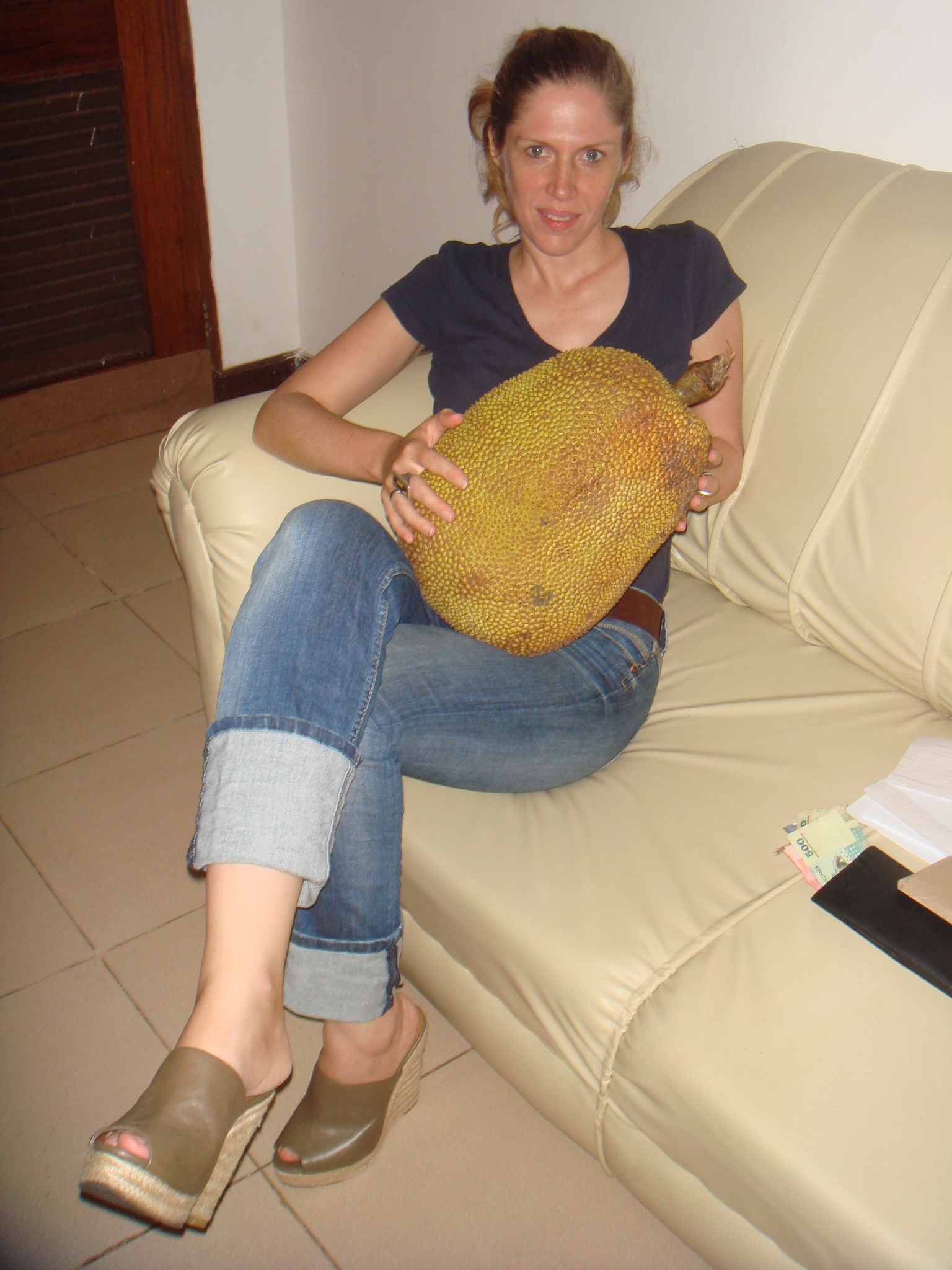
We were given a jackfruit as a present on Pemba (Nadine’s doing the blog on that one later). A couple of oranges would have done.

a jackfruit loiters in the corner

Yes it is as heavy as a small iron dumbbell. And no it doesn’t turn any heads at Pemba international airshed  airport. Neither though do chickens or small coffee tables with only 3 legs. However, whereas chickens and 3 legged coffee tables apparently class as carry on in Pemba, there’s a big issue with large fruit meaning it had to go in the hold.

Anyway, we safely got it back to the house. Nadine wasn’t too impressed with it. Especially when it began to emit dangerously sweet ripe odours.

You hold it. I’ll take the photo

We hadn’t a clue what you do with it. I’d been told that you had to be careful when opening it. Something about latex and glue that never comes off and fruit with cyanide that kills if you don’t cook it long enough. So we donated it to the college under the condition that we got to see how it’s opened and watch a student being fed to see the effects of the cyanide.

An expertly dissected jackfruit

The glue bit I got right. Latex glue. Murder to get off. We had to peel Ali off three support columns and two students before he stopped sticking to things. The cyanide I mixed up with cassava. Cassava leaves have to be boiled to get rid of it before you eat it. Very tasty though. We had that on Pemba with a lovely piece of fish as we watched dirty great red chested fox bats silently cruise past us on a balcony overlooking the port (all in Nadine’s blog and much, much more dear reader). The fruit itself is sort of a mix between pineapple and chicken. Strange but a clear hit on the college campus.

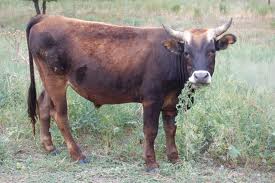
And Ali? Well, the last we saw of Ali was him stuck to a cow as it trotted out of the college in search of better grazing.

Posted in Uncategorized | 6 Comments

And I thought leeks were useful

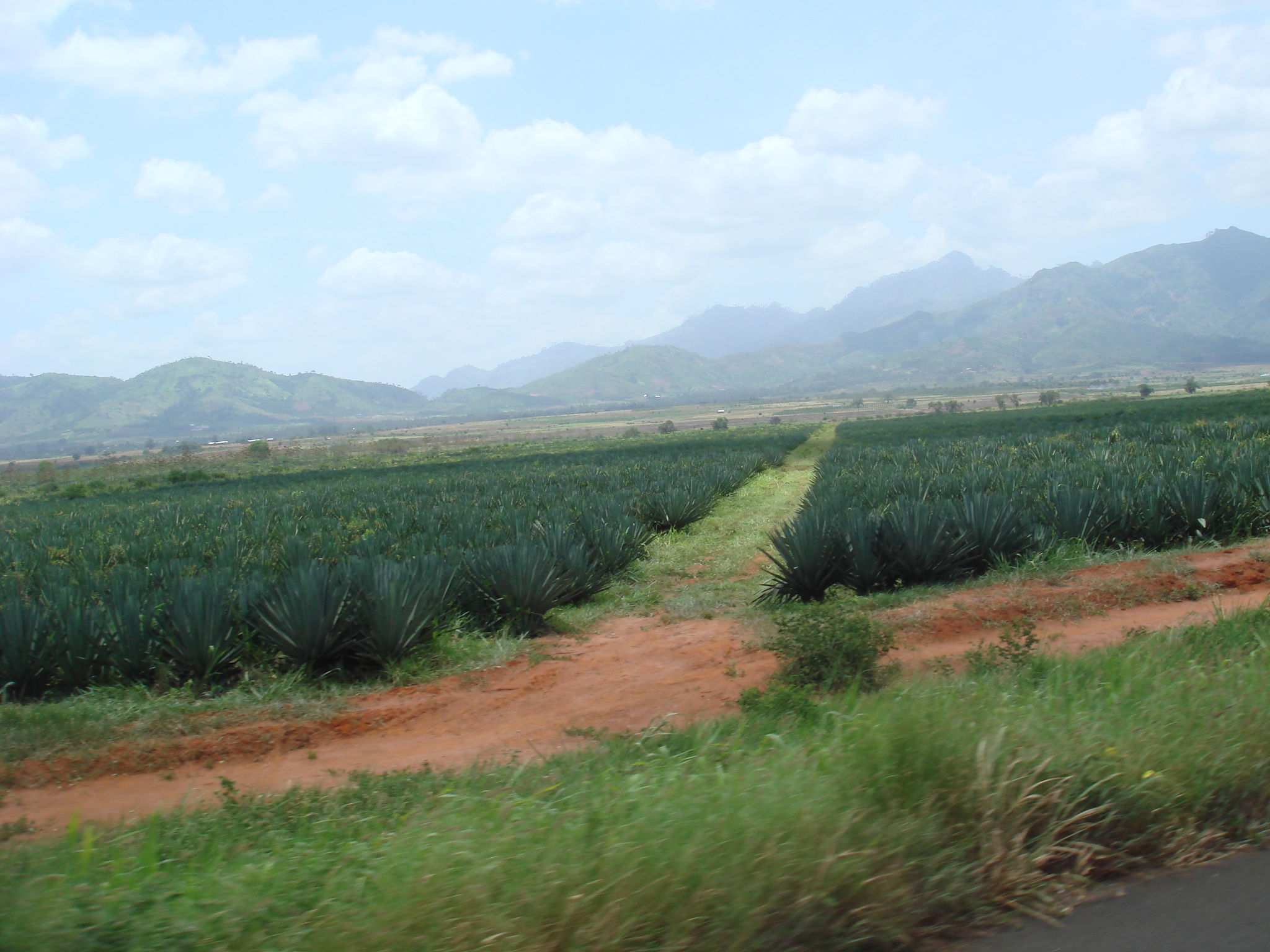
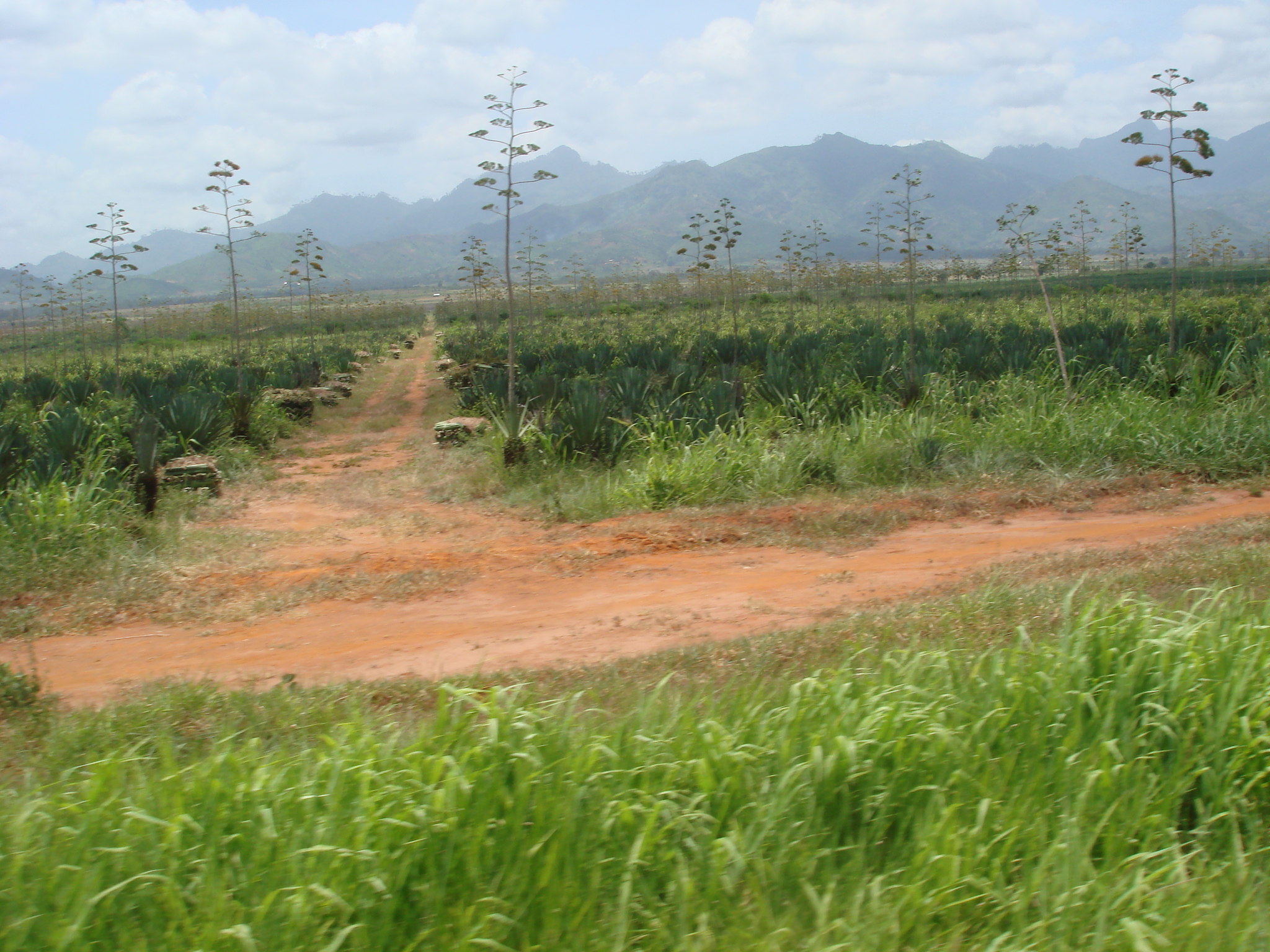
Things you should know about. Sit up. Pay attention. Below is a picture of what your welcome mat comes from, what you dip into hot water to make your tea (no, no, not tea, the teabags), the stuffing in your car seats, the carpets you walk on, the wallpaper you look at, string and ropes of all shapes and sizes. And, since oil hit $90+ dollars a barrel, a more cost effective substitute for durable plastic and fibreglass. Think about all that stuff made out of hard plastic and fibreglass. Now think about growing it instead of squeezing and extracting and chemically rendering it out of oil.

a field of growing plastic

Sisal. The wonder crop of East Africa and beyond. Grows right up to the dessert and will thrive on as little as 120mm of rain a year. It could definitely survive a hosepipe ban. We’ve met the bloke responsible for leading the research into it. He’s spent most of his working life on it. His dream is to see it being used to eradicate the Sahara dessert. All apparently quite possible apart from the politics. Not a bad dream and puts my dream of owning a members only bar on a beach on Bali selling nothing but Federation Brewery Ale and North Shields haddock and double fried chips (mushy peas and onion gravy a side dish option) into harsh perspective.

It’s only the leaf veins that go into the above products (no, no, not the haddock and chips, the products preceding the haddock and chips bit). The residue is dried and used as crop feed. Cows love the stuff apparently. It also contains something called hecogenin. Steroids to you and me. China has consequently put vast swathes of land under sisal and they now lay claim to 80% of the world’s steroid production, legal or otherwise. It’s also a self pollinator so no expensive pollination crops and rotations. The plant produces about 250 leaves in its life time. Towards the end it shoves up a stiff, tensile stalk and produces hundreds of thousands of mini sisal pods.

stiff and tensile

You simply lop them off and stick them in the next available plot. The stalks themselves are apparently stronger than carbon fibre and are being researched for their industrial use. All that from one plant. Good stuff, eh. And I thought leeks were useful. They are actually, but that’s another story.

Posted in Uncategorized | 2 Comments

Was that alright Steve?

At popular request (OK, my mate Steve in Berlin asked) ‘A Day In The Life Of … Me (A Day In The Life Of … Nadine, is part two).

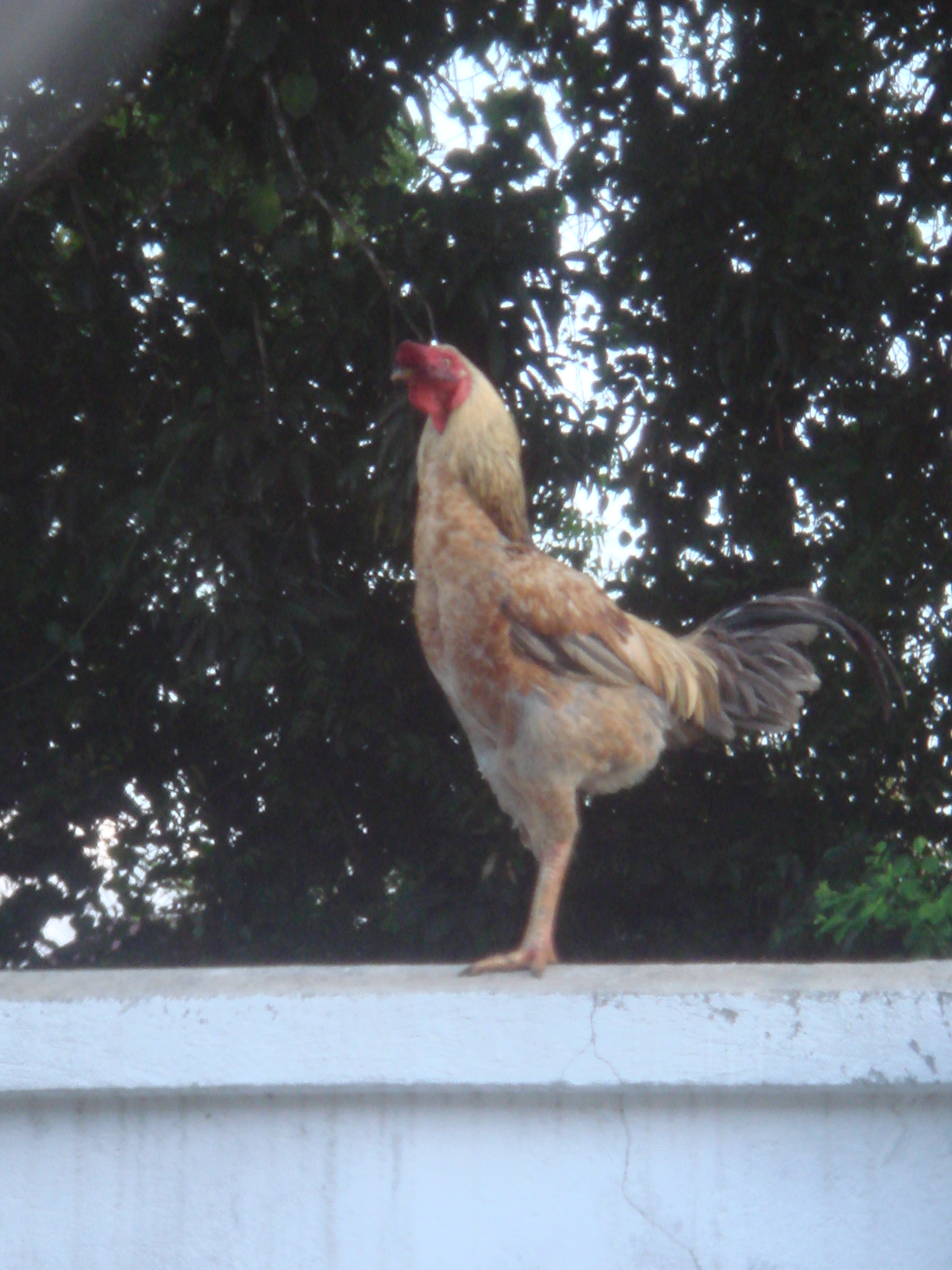
Generally I get woken up at 5.15 (no half measures Steve. You shall have the entire day) by the mosque dude. Actually he’s very melodic but just a tad too loud. Fall back to sleep and get woken up again at 6:15, by El Bastardo strutting the garden wall. Get up at 6:30. Throw a flip flop at El Bastardo on the way to the shower. Open bathroom door and check for living things or half living or spasming things in the corner i.e. ants, large winged insects, beetles, long shiny black, red and green millipede things. Oh, and lizard shit. We’ve never found the lizard in the act, but he leaves a heap of the stuff. I think the little sod comes with a carrier bag full from his house just to dump it in our bathroom.

‘El Bastardo’ aka ‘Old Yellow Eye’

Nothing with more than two legs uses my toothbrush and lives

Anyway, once the floor and walls are cleared I do my ablutions. Saline water but it’s fine. Once abluted, I retire to the dining/living room for breaky. This can consist of banana, cinnamon and yoghurt (deelish’), mango, nutmeg and yoghurt (deelish’) and/or a dollop of Nutella (YES OH YES. WE HAVE FOUND NUTELLA!) or local honey and banana between two squashed slices of bread (lush’ and deelish’).

Bit of a tasty bloke with some tasty food (Nads told me to write this)

Start drinking the first of what will be gargantuan quantities of water.

Dad, with your waterworks you’d simply have to stay on the toilet all day.

Wait for the work siren – Stone town still blows a siren to signal the start of the work day at 7:30 and the end at 3:30 – and begin the journey to work. 35 seconds later I arrive at work, via a saunter through the college fields and garden.

rush hour

Meet and greet my work colleagues. This is an art form in Zanzibar and can often take the entire work day to complete. As a rank amateur I can only muster about 10 minutes per person before I develop a nervous tick. If we’re lucky and he’s not busy we might get to chat with the college principle. Work, life in Zanzibar, religion, politics, football. Everything. A fantastic bloke. We enjoy our chats with the principal.

Our boss. Top man. (with a top frau!)

Our work colleagues are also all super nice and try their best to make the two wazungu (white people) fit in. I won’t bore you with the details of work. I’ll save that for another post. Lunch if we’re lucky will be when Esti brings in the home made Samosas. Big fat crispy puff pastry sacks filled with spicy meat. 4 will usually do the job.

4 ex samozas (scoffed by my wife as I composed the shot)

Work comes to an end around 3:30 though we often continue a bit longer as we’re conscientious and industrious little VSOs. Eventually we’ll stroll back to the house. Once home, I put on my smoking jacket, pull out the old pipe and slippers and have my dearest pour me a cup of Earl Grey into the family china. Failing that, I’ll leg it along the back road on my bike in search of road side food stalls selling chicken and chips, curried potato balls, dried fish, beef skewers etc. Most of it is a deep fried fat lovers wet dream (that’ll be me). You can’t take it every night so we’ll mix it with trips to the local market stalls for mangoes, tomatoes, onion, pumpkin, sweet potatoes and the like. There’s actually surprisingly little variety on the veg front. It’s all fresh but goes off really quickly so you have to get your timing spot on.

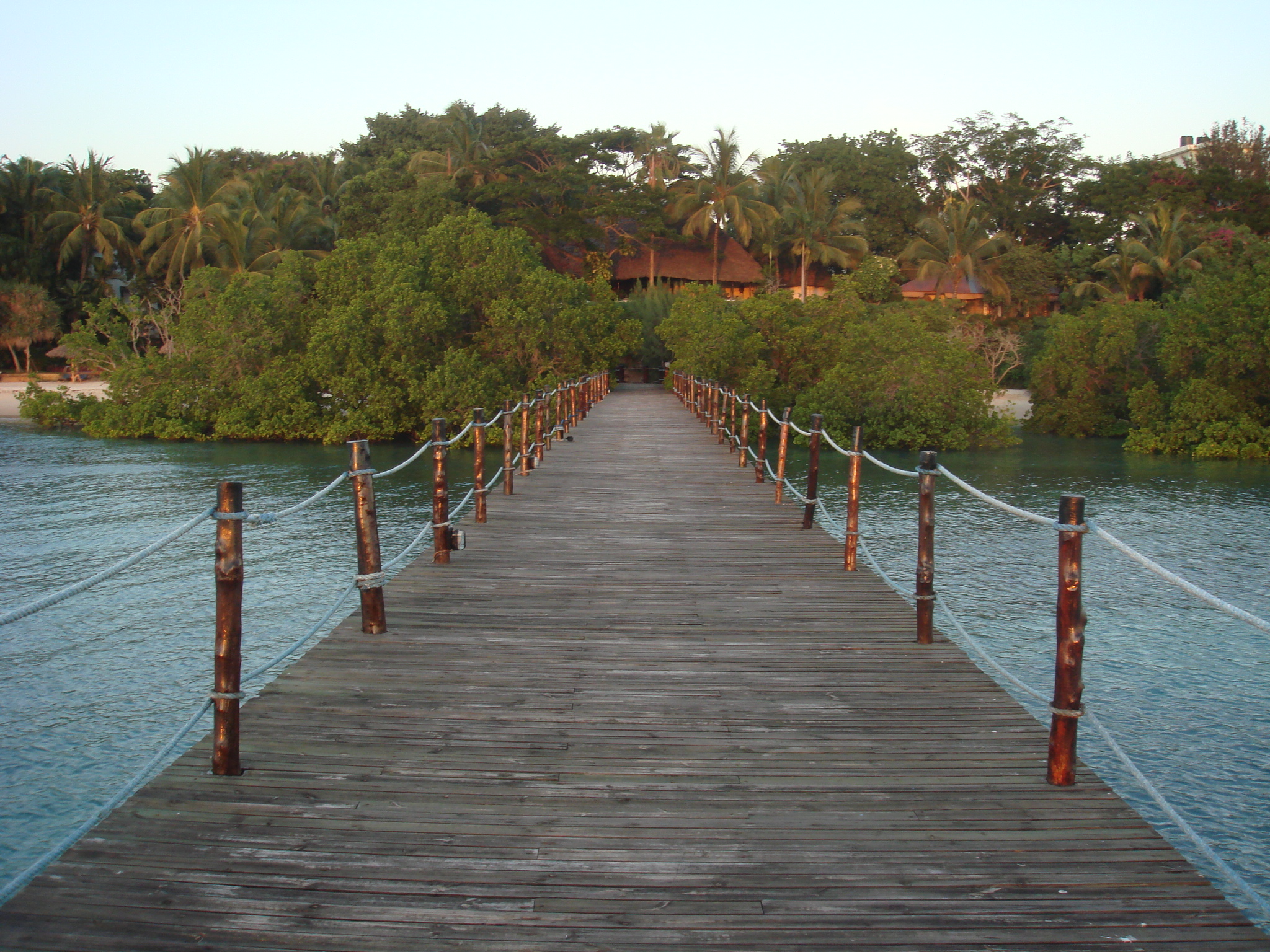
There’s also a beach nearby with a hotel in between the mangroves so we’ll have a wander down there to catch the sunset have a swim and a beer. Pretty nifty all in all.

Our local

Right this is a bazooka of a post. I’ve probably broken a whole raft of blogging etiquette rules so I’ll stop there.

Was that alright Steve?

Posted in Uncategorized | 3 Comments

Why are we here?

Okay, enough of beaches and motorbike pirouettes and wriggly worms for now. We haven’t really written about what we are here to do as VSO volunteers. So here’s the confession: Yes, we are working here. Quite a lot actually! I guess it’s time to give you a bit of content background on why we are out here, working in the health sector with no medical background whatsoever….:

In Zanzibar the level of qualifications of health staff is a big issue. In some of the rural hospitals for example you may be diagnosed by an orderly, that is a staff member who has no qualification, a cleaner or administrator.

Also, career development for staff with qualifications, but at a lower-level (Certificates only), in nursing or pharmacy for example, was not supported in a strategic way in the past by the Ministry of Health, our official employer. They are now focussing together with their bi-lateral development partner, the Danish development agency,  on developing  clear career paths and offering development opportunities for health staff in service, often including qualifications such as Diplomas and M.A.’s.

The Ministry of Health in Zanzibar (quiet on a Sunday)

Another issue around producing qualified health workers lies at the pre-service level: Zanzibar consists of two islands, Unguja (to foreigners known as Zanzibar), and Pemba.

Unguja and Pemba off the East coast of Tanzania

Unguja and Pemba off the East coast of Tanzania

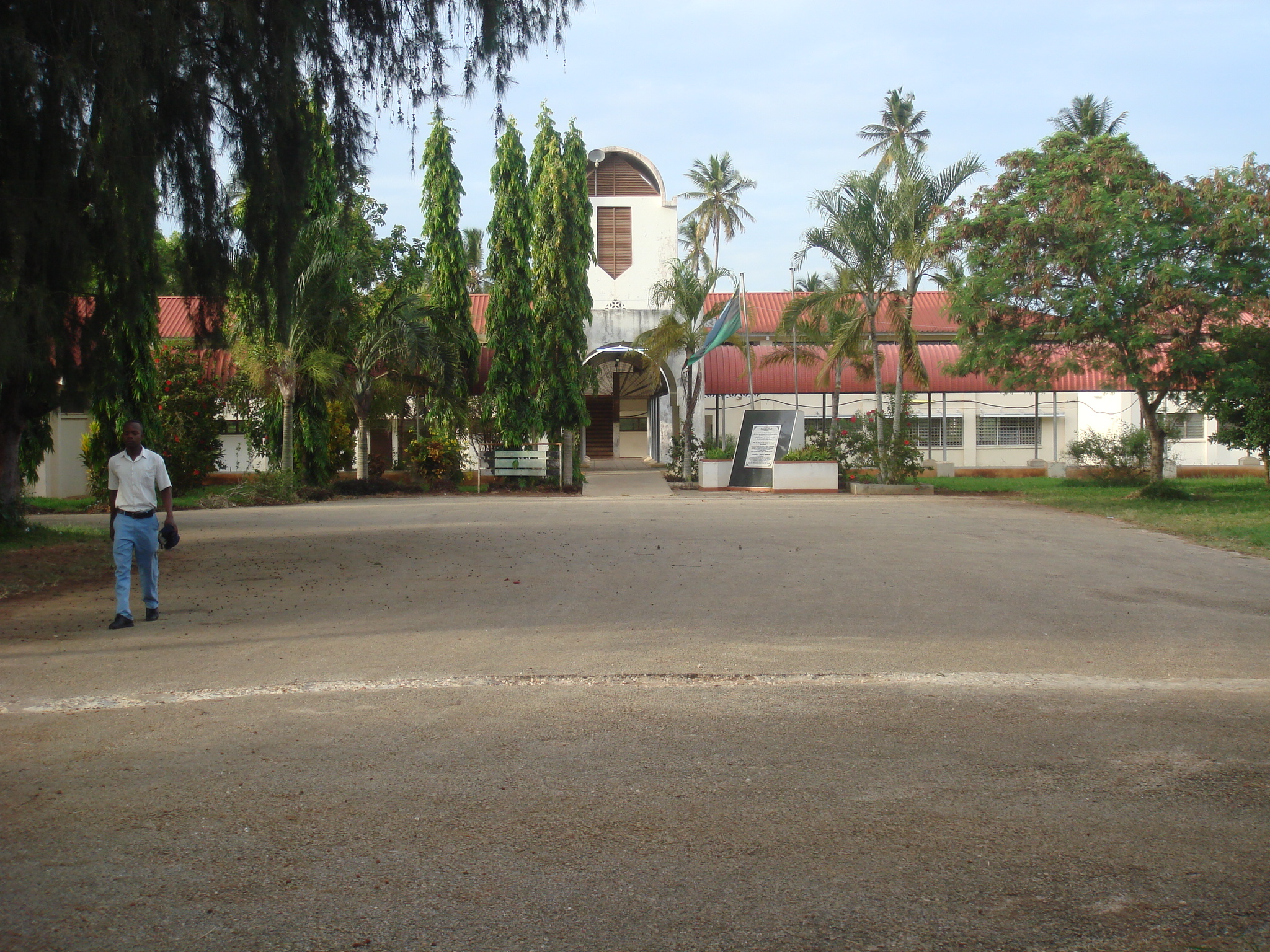
Now the College of Health Sciences (located on Unguja), where we live and spend a lot of our time at work, trains students to become nurses, clinical officers, lab technicians, pharmacy technicians, environmental health officers and medical engineers.

The College of Health Sciences

The College of Health Sciences

It’s the only vocational provider of this kind across Zanzibar, so many students come from the other island, Pemba. Hosting these students for 3 to 4 years is expensive for everyone involved and often has unwanted consequences: Since the quality of living and salaries are higher on Unguja than on Pemba many students do not return home to Pemba to work there, which leads to an eternal health worker shortage on the island. We are also told that many of the girls get married on Unguja and don’t end up working at all. You may now begin to see where e-learning enters the picture…..While we are not out here to be the destroyers of love matches and guards of borders, there are some clear and more non-disputable advantages in developing an e-learning offer at both pre-service and in-service level, revolving around costs, quality of materials, flexibility regarding learning hours, keeping staff on the job while learning. So it’s our job to further equip the College to become the e-learning hub and create small-scale e-learning centres for in-service training mainly in hospitals across the two islands.

With our IT colleague at the future resource centre in Kivunge hospital

With our IT colleague at the future resource centre in Kivunge hospital

John has just set up an e-learning structure in the format of a Moodle as a “one-stop shop” for all related materials which includes lesson plans, reference materials, quizzes, forums, chat functions, setting and uploading of assignments etc. Lecturers will also be able to record their voice to accompany PowerPoint presentations, to be accessed by students any time. We will be supporting the College in moving from a face-to-face methodology to a blended-learning approach (a mix of traditional face-to-face teaching and e-learning). The ambition is to help them become e-learning whizzes who can offer their knowledge as consultants to the mainland in the future, as e-learning is still a new thing in the health sector in Tanzania.

We’ll also be working with the hospitals to set up a robust structure that will allow staff to do effective learning on the job, including the use of tele-medicine for getting a second opinion on a diagnosis. We’re co-ordinating the acquisition of existing content regarding basic skills such as English and computer skills, and of health content to upgrade staff in the various professional fields.

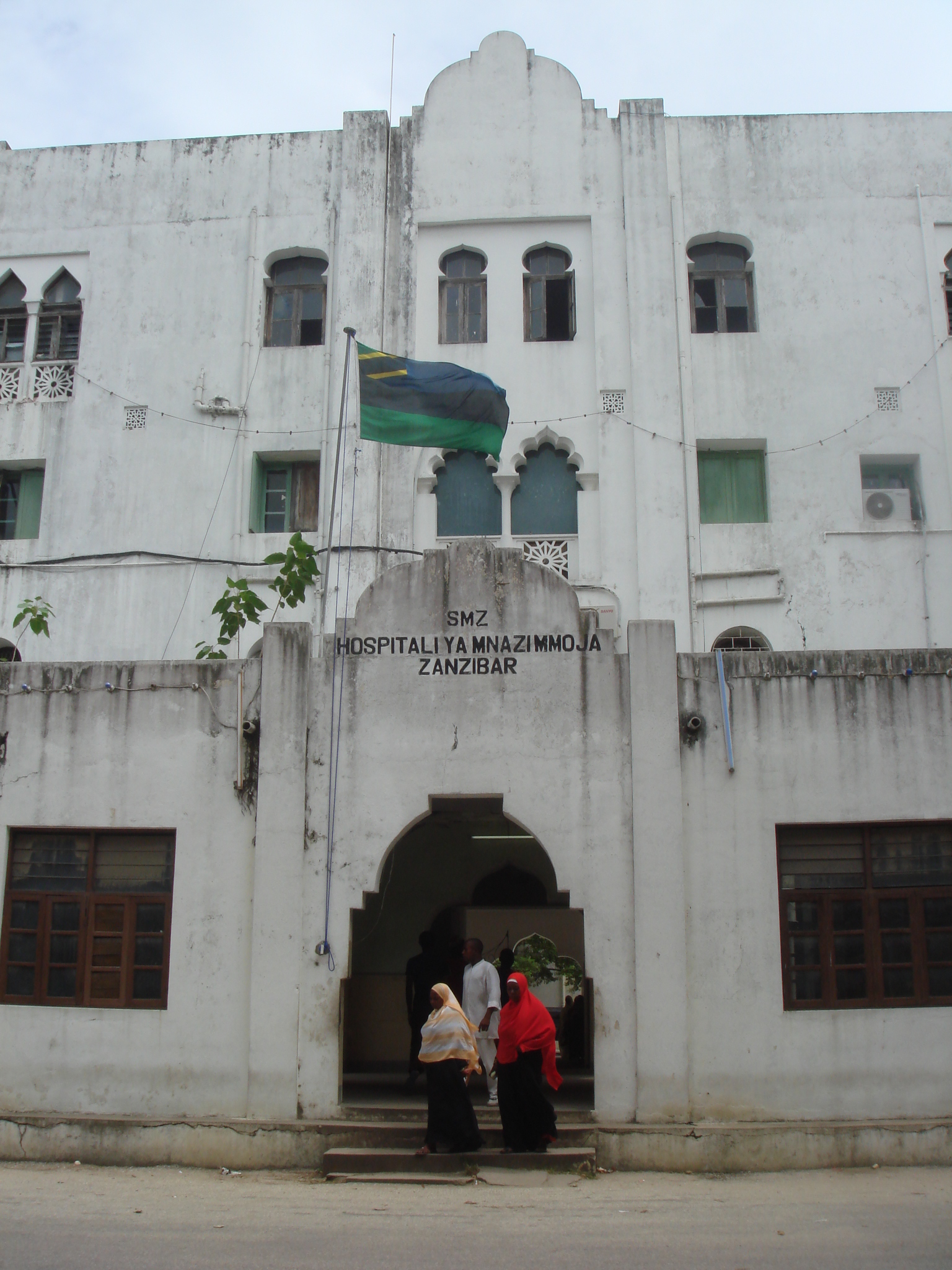
Mnazi Mmoja (“One Coconut Tree”) Hospital, the main hospital on Unguja

International partners are/will hopefully be for example WHO and AMREF, but also local Tanzanian organisations who have quality materials to offer, either in e-learning format or to be adapted to an e-learning context.

The focus areas are linked to Millennium Development Goals 4, 5 and 6 (http://web.undp.org/mdg/basics.shtml ): child and maternal health, HIV/AIDS, Malaria, immunology, non-communicable diseases and nutrition.

We have local counterparts at the College and the Ministry that we are already working with or will be working with in the future, when they are finally available, back in their job, returned from training elsewhere (quod erat demonstrandum, ey), to do capcacity building and ensure that the whole project doesn’t fall down but is in capable hands and can be sustained when we leave the country; one of, if not the greatest challenge in development work.

And then there are things in the periphery that have come up, electronic record keeping of patient data in hospitals, a database on in-service training delivered and required, a learning and development strategy for College staff etc. that we are or will be dipping into. Our work is diverse and there’s so loads  to learn and hopefully a bit to contribute.

But this was just a first general overview for you after just under 3 months on the job. More details to follow in future posts, about successes and challenges, of which there are a few…

Posted in Uncategorized | 3 Comments

Crease fetish

Life adjustment no 4. – Having to iron every piece of clothing after you’ve washed and hung it out to dry. No, Tanzanians don’t have a crease fetish. You methodically iron your clothes because of tumble fly. Tumble flies like to lay their eggs on clothes hung out to dry and after you put on your washed and dried clothes your body heat and chemicals activate the tumble fly eggs. You become, in effect a walking incubator. The eggs hatch within hours and the larvae ‘tumble’ out onto your skin where they proceed to dig and burrow. Not too far, just enough so you can see them wriggling around as they munch on your sub cutaneous layers.

snug as a bug in a piece of flesh


Ironing your clothes kills the little horrors before they get a chance to hatch. However, should you still fall prey a cheap, practical solution is at hand. Vaseline. The larvae have to breathe and so push little air tubes through your skin. If you cover a larvae infected area with Vaseline (in the example told to us it was the backend of a volunteers wife) you block their airways and within 10 minutes you’ll have them burrowing their way out, gasping for air. At which point, I suppose you can go over the affected area of flesh with the iron again and finish them off.

A tumble fly fighters first and last line of defence

Posted in Uncategorized | 4 Comments

Just back from a two week sojourn in Dar Es Salaam. One week work stuff another week doing motorbike training. Having seen Dar Es Salaam traffic and the size of the motorbike we’re supposed to ride we were slightly apprehensive. I’ve never ridden anything bigger than a 70s Chopper (though it is a beautiful ride, very smooth gear change and a babe magnet. Mandy Pierce in class 2 was all over me).

A classic 70’s engineering work of art

I digress. Anyway, having completed the course, 3 days, we weren’t half bad. Nadine was slaloming through water bottles and I was doing backward flip wheelies. Photos below as proof. The backward flip one didn’t come out which is a shame because it gets a good angle of me in the air and the bike upside down. I’m digressing again.

A Honda 125 slalom goddess. At least until just past the paint can when she decided to accidently run me over.

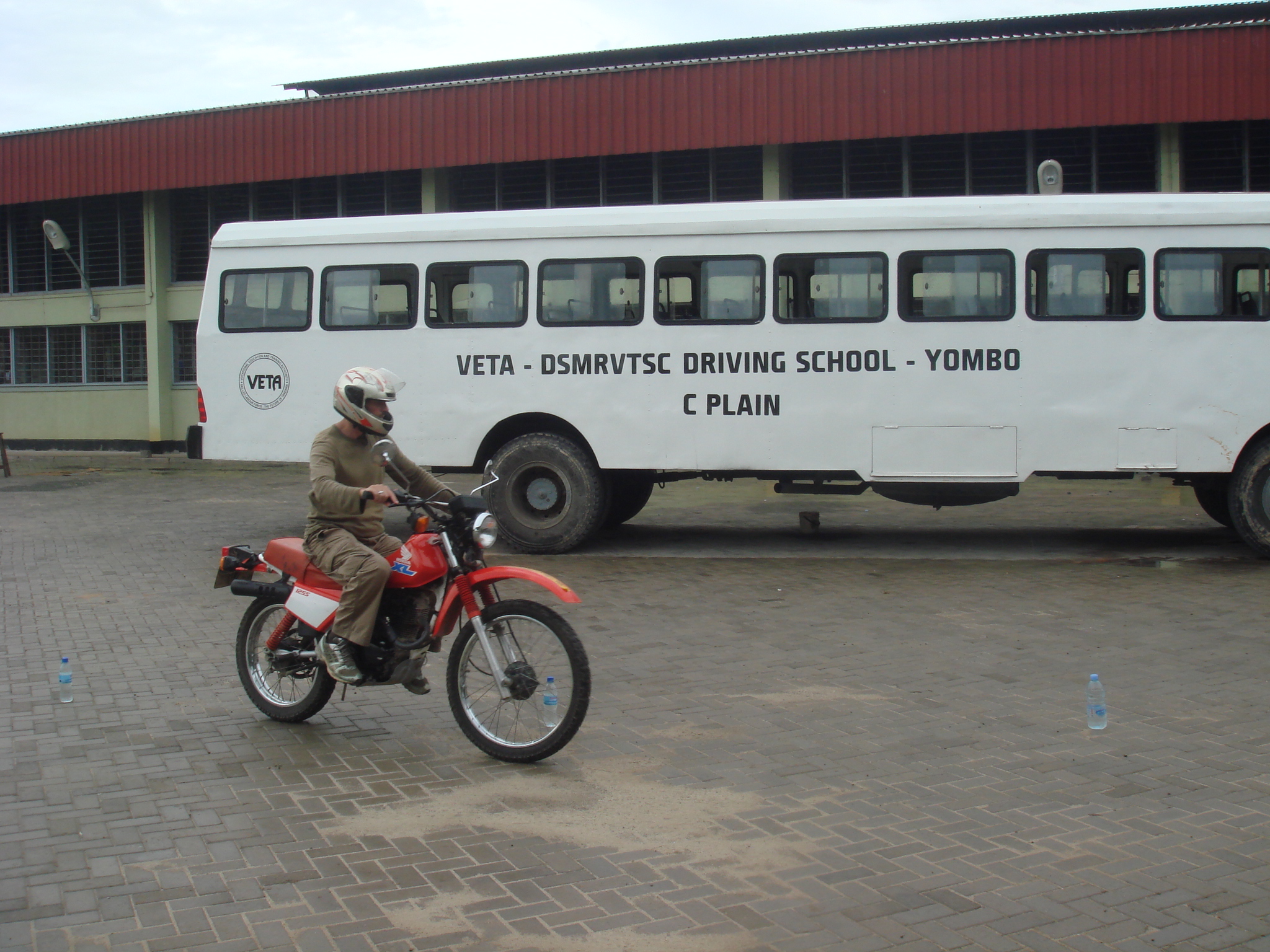
Final inspection of the take off ramp (just to right of this photo) leading up to the VETA bus I back flipped over …3 times …blindfolded.

We now just have to wait for our driving licence to get sorted out. No test required in these parts just two arms, two legs and 10 quid will get you on the road. Don’t worry mam. We’ve got all the necessary crash helmets and I promise we’ll drive safely.

Vroom! vroooooom!

Posted in Uncategorized | 4 Comments

Badaaye (see you soon)


John and Nadine receive a call from Mr Tiru. Mr Tiru is processing their flight tickets for a business trip to one of the islands.

John’s mobile: Bringg Bringggg

John: ‘Hello’

Mr Tiru (shouting): (Something in Swahili).. Tiru.. (Something else in Swahili).

John with mobile a foot from ear: ‘Hello Mr Tiru. How are you?’

Mr Tiru (shouting): Hello Mr John, where are you?

John: Jane’s house.

Mr Tiru (shouting): Yes… Where are you please?

John: Pause… …Jane’s House Mr Tiru. The house of Jane. You know Jane. She is our boss.

Mr Tiru (shouting): Yes yes. Jane. Your wife. I am processing her plane ticket. (Shouting much louder) Where are you!

John: No Mr Tiru Nadine is my wife. Jane is my boss. We are at Jane’s house. We are at the house of Jane.

Mr Tiru: Pause…Please tell me where are you!

John: Where should we be Mr Tiru?

Mr Tiru: Pause…..(shouting) Are you at the college? (where we work)

John: No Mr Tiru, but we can be there in 20 minutes.

Mr Tiru: Pause…..

John: Mr Tiru?

Mr Tiru: Pause….. (shouting) I am at the college. Tell me where you are?

John: We can come to the college in 20 minutes.

Mr Tiru (shouting): You are here?

John: No Mr Tiru we..

Mr Tiru (shouting): You are here?

John. We are coming Mr. Tiru. Stay there, please.

Mr Tiru (shouting): I wait for you. Come to me. Badaaye (‘see you soon’).

John: See ….  (Mr Tiru hangs up).


John and Nadine arrive at the college hot and sweating profusely after a 20 minute dash on bikes in the midday sun. The college is silent. A cow is grazing on the flowers planted last week at the main entrance. There is no Mr Tiru. John calls Mr Tiru.

Mr Tiru (shouting): Naam? (yes?)

John: Hello Mr Tiru. Where are you?

Mr Tiru (shouting): I am here.

John (looking left and right): Where Mr Tiru? The college?

Mr Tiru (shouting): No.

John: Pause….. We are at the college Mr Tiru. Where are you?

Mr Tiru (shouting): I have your plane tickets.

John: Yes Mr Tiru. Are you coming to the college?

Mr Tiru (shouting): Come to me tomorrow. Badaaye.

John: Where are you Mr Tiru….?

Mr Tiru hangs up.

Nadine gazes to the heavens. . . John kicks a passing chicken into the scrub grass.

Posted in Uncategorized | 5 Comments