John’s been telling me off because I am so late with this one. My sincere apologies, Asche auf mein Haupt, je suis désolée, pole sana!
So, finally: Some reflections on our fantastic visit to Pemba- yes, it does seem ages ago now, but we did have such a good time, it’s still worth writing about.
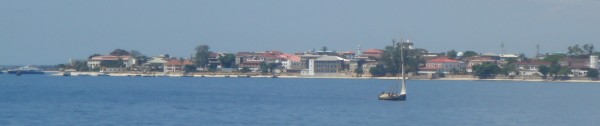
Pemba is 50 km north of the archipelago’s main island Unguja, where we live. It’s more conservative and less developed than Unguja, there are only a handful of hotels. It is also, in our view, the (even) more beautiful island.
This was our plane:

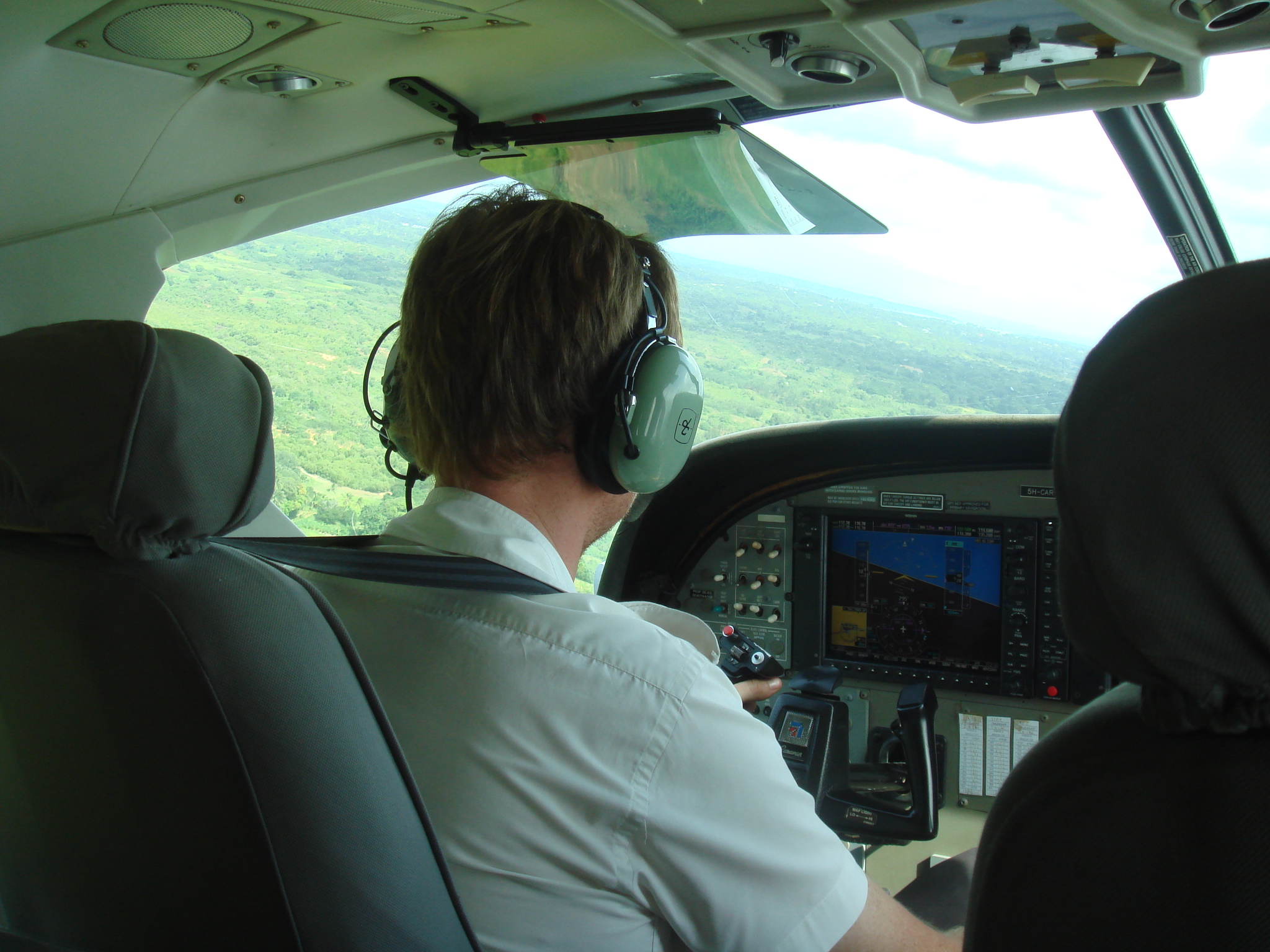
I think it caters for up to 18 passengers. Hovers just above the cloud line after take-off, and when it flies through clouds or rain, boy, do you notice it at times. I can think of a couple of you out there who may not have appreciated that flight. Luckily enough we both don’t suffer from a fear of flying as long as things don’t get too exciting (I do have my limits, I’ll admit it),but the bumpiness was acceptable and the whole trip of 30 minutes was quite a treat. As you can see one could look right over the pilot’s shoulder, straight into the cockpit and beyond:
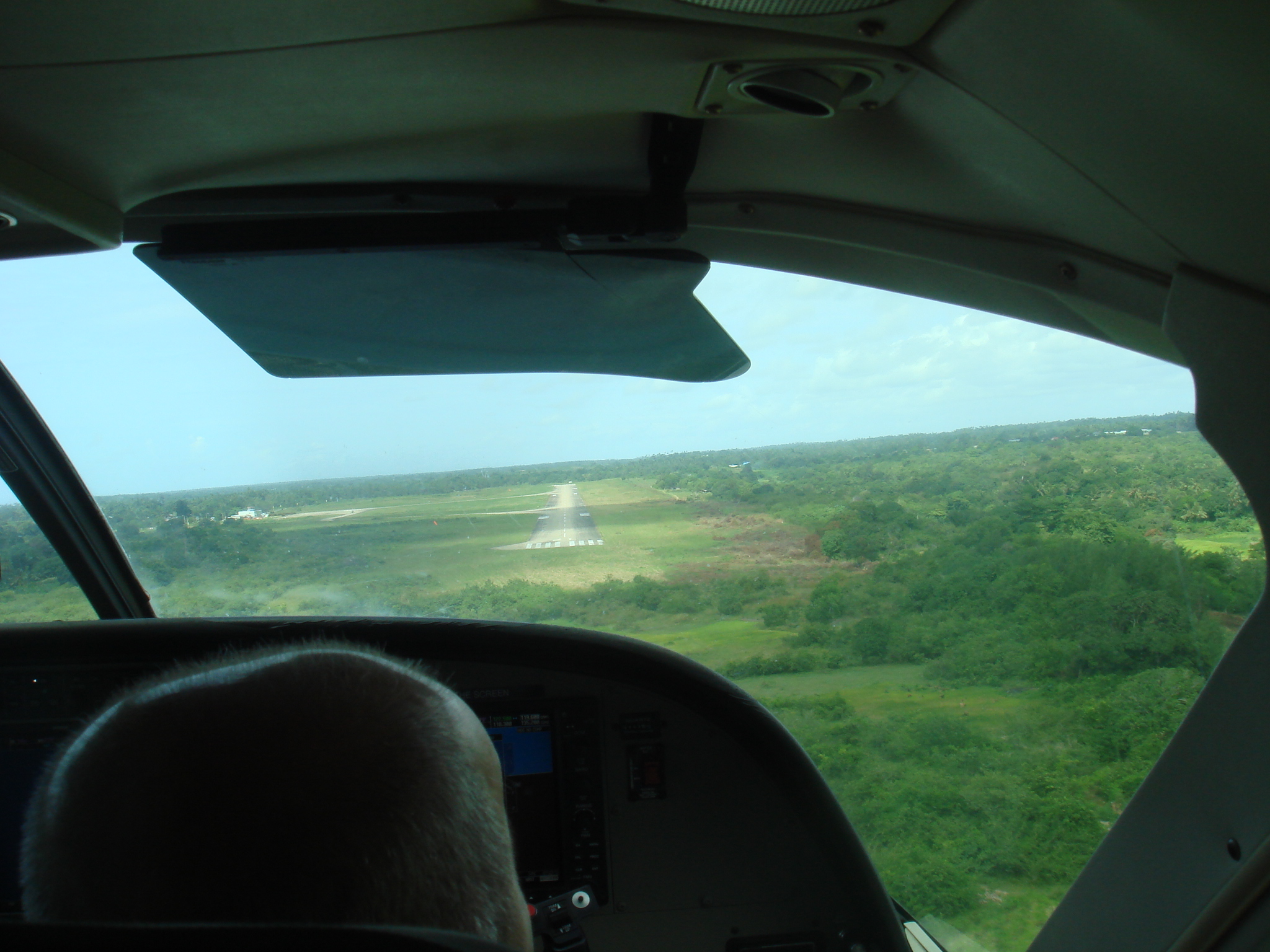
Looking down onto the runway
Here’s just a couple more impressions from the flight: The colours are more impressive in reality:

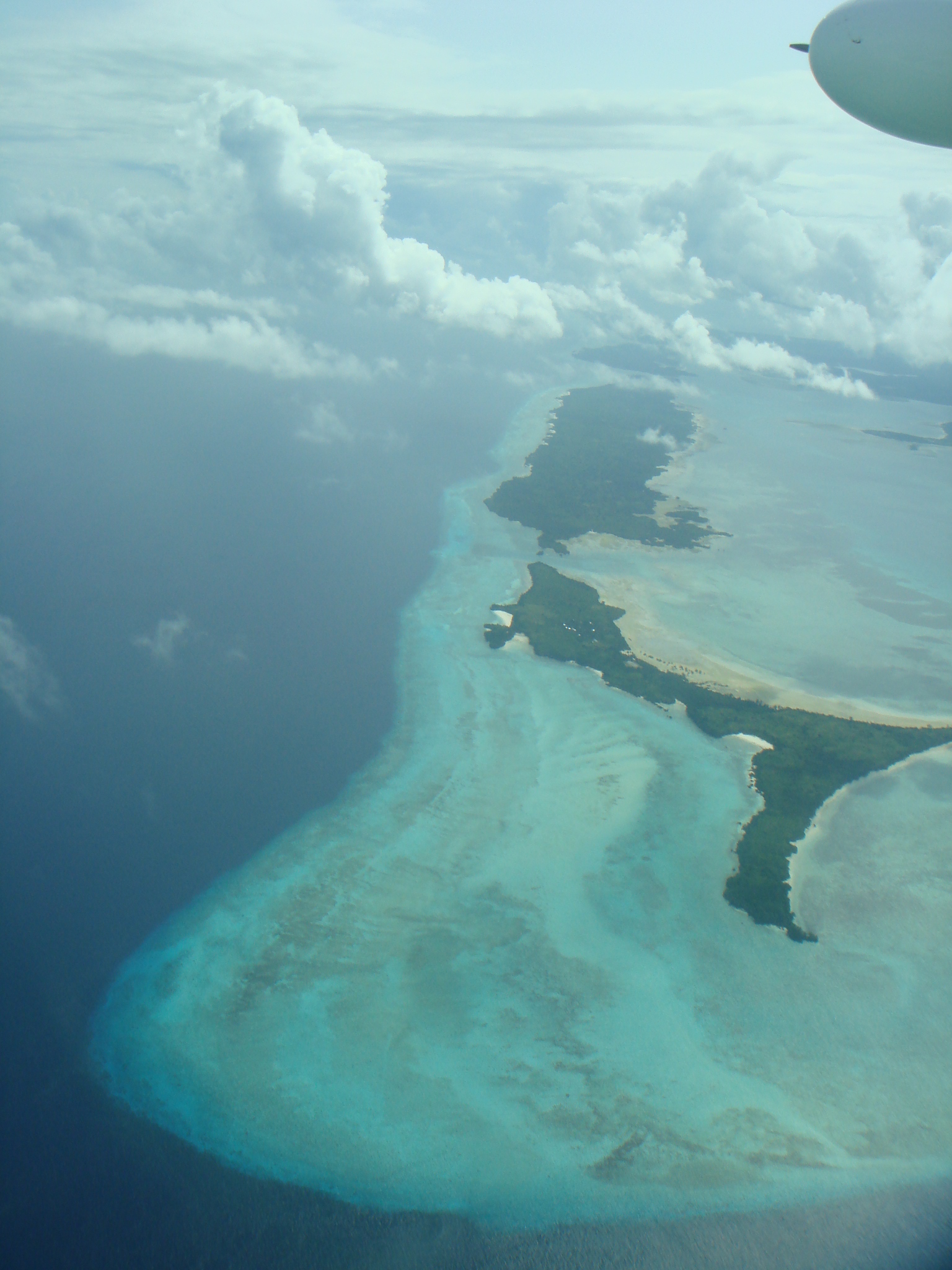
The island is known as ‘Al Jazeera Al Khadra’ in Arabic – the Green Island. It is also called Tanzania’s food basket because a lot of the fruit you buy in Unguja or Dar es Salaam actually comes from Pemba. There are fruit trees everywhere along the roads (why the Pembans are still so poor I do not know. Apparently they export so much of their fruit that there often is a shortage on the island itself). Another significant difference to Unguja are all the small rice fields everywhere – together with bigger palm trees, the little hills and winding roads (Unguja is very flat and in parts quite arid), and the rich green colour everywhere it made a wonderful reminder of Indonesia for us. One day we will manage to get a job there, I know!
We were lucky to get to see quite a lot of Pemba because we had to travel right across the island, kreuz und quer, covering visits to 5 hospitals in 2 ½ days. Everything was really well organised by our Pemban Ministry colleagues, a welcome committee was awaiting us with a car, on time, at the airport, with a clear plan about what was going to happen. We were rather impressed. I did have to be careful about handing out the petrol money in chunks though as apparently the availability of the Ministry car was being made full use of during the evening and early morning hours…
Anyway, after meeting the key players from the Ministry on our first afternoon we found our accommodation: The VSO volunteer representative for Pemba, a volunteer within their education strand from the Philippines was kindly putting us up in his house, a typical shamba, “farm house”: Living and bedrooms in front, a back yard and beyond that a separate kitchen and toilet area.
We were really spoilt, being hosted by a colleague who is both an excellent cook and an upliftingly (if that is a word) positive-minded person.
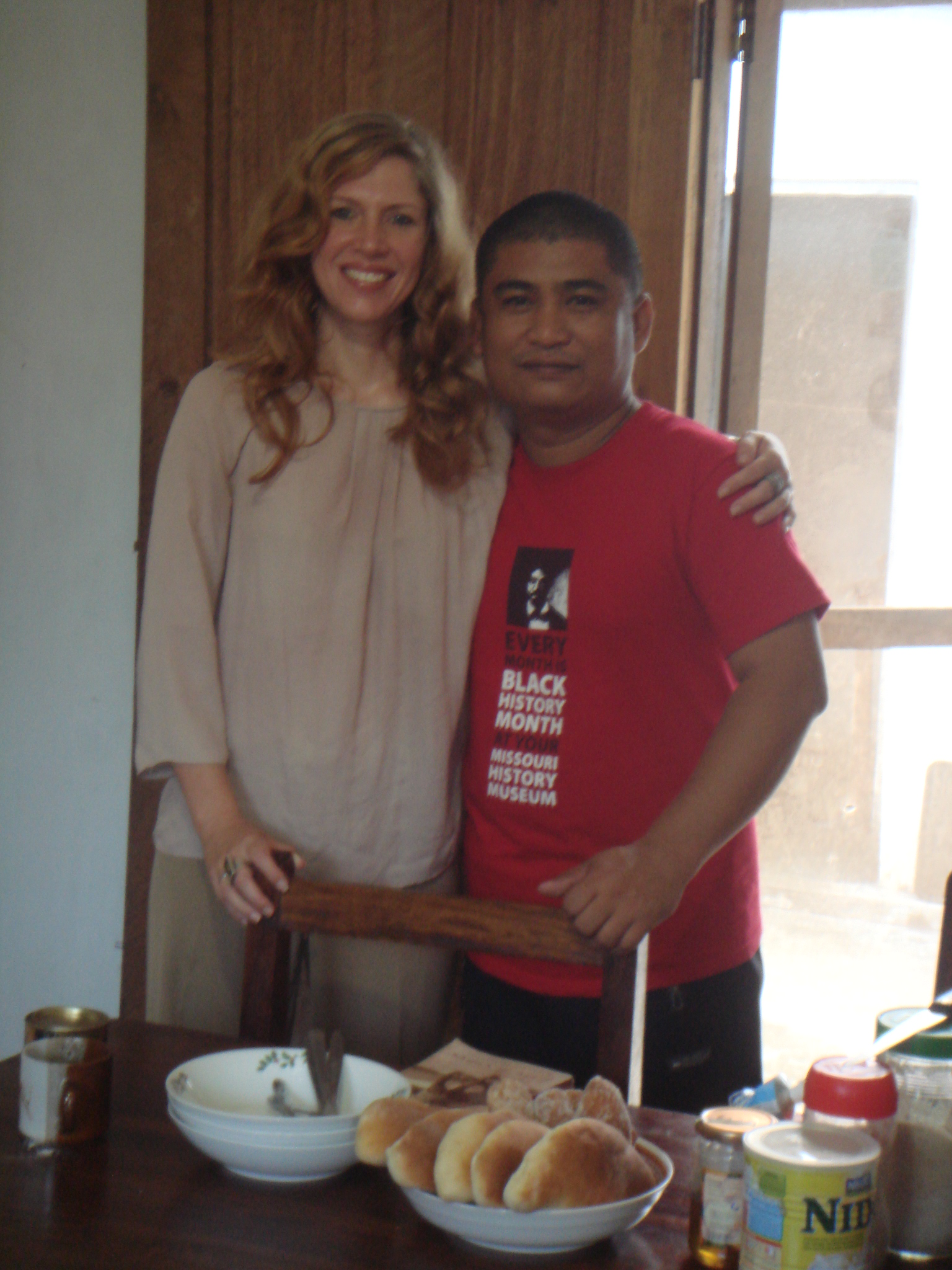
Before breakfast
Having volunteered for about three years he has not only supported teachers and school administrators in his day-job, but also planted mangroves by the sea to restore the biological equilibrium in the vicinity; he regularly hands out condoms for women who are desperate to ensure they do not become pregnant for the ninth, tenth, eleventh time (I am not exaggerating), and has managed to reveal corrupt structures at work without getting himself kicked out of his job. We were intrigued, not just by the afternoon snack he served us!


Err, these ones we didn’t eat, only admired: Flying Foxes as they call them, the famous Pemban maxi-bats.
Sorry, the size of the above photo doesn’t really help, but if you look closely you might notice that the bats have huge wings, they really are enormous!
Our stay did also remind us of how lucky we are with some aspects of our accommodation: I decided I couldn’t wash my hair there because the daily water supply consisted of two or three buckets delivered by a villager directly from the well (how far it had been schlepped I do not know). I probably would have used half to two thirds of the daily supply by washing my hair. Have been wondering what I would do if we had so little water – I guess I’d really need a radical hair cut!
The visits to the hospitals went well – we’ll be starting off with equipping one hospital with some computers, as a pilot, and working with staff on how to maintain the place and give support to learners.
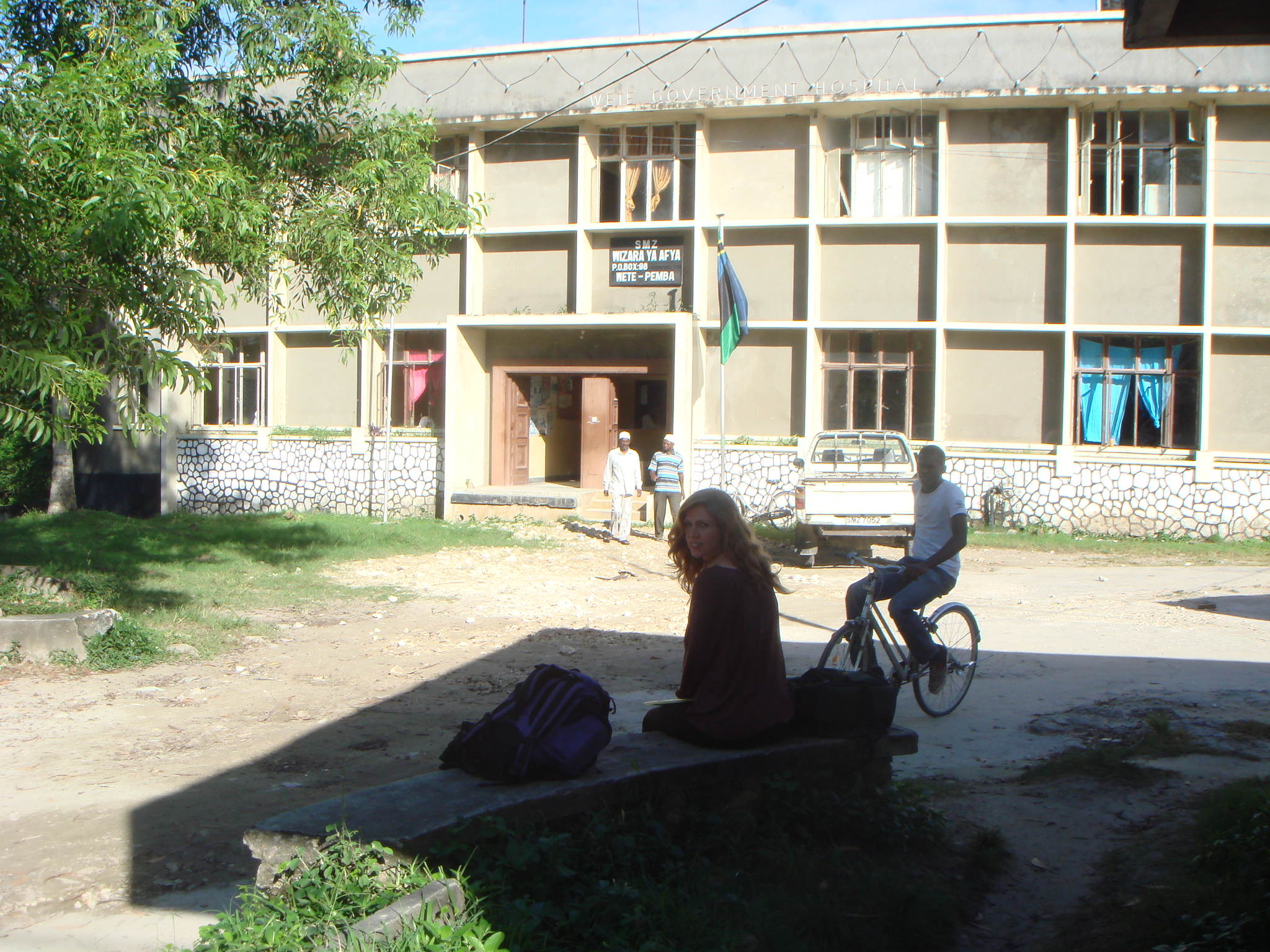
Waiting for our colleagues at our pilot hospital
4 other resource centres should follow next year. Staff will be able to access English, typing and ICT courses, do short health courses and longer upgrade courses. The big experiment will be the College teaching 5 second year student nurses from this November to January 2013, via e-learning. Lots and lots of steps that need to be in place before then (including lots of training) but with some luck it’ll work. We really enjoyed dealing with an active team that are organised, committed and help to make things happen.

Fingers crossed that together we’ll be able to put our plans into practice.
We’re already looking forward to our next visit, hopefully in August or September. Perhaps we’ll be able to stay on, rent some bicycles and roam around the island a bit, get some photographic proof of those beautiful rice fields for you, that would be nice….
 najonajo
are you saying you ate bat?
Got you on that one, didn’t I? Someone didn’t read the caption… But out here I guess you never know: Our VSO Cookbook for Tanzania features Fried Flying Ants, Fried Grasshoppers and Lake Flies in Ground Nut Sauce (including wonderful instructions on how to catch themy by the handful. Hm, yummie….